We drove from Mweiga to Nanyuki, fuelled our four-wheel drive and continued to the conservancy. We had the whole day ahead of us, with the freedom to explore at our own pace.
Our first stop was the chimpanzee sanctuary, where a guide introduced us to the animals and their stories. Afterwards, we spent hours driving around, looking beneath trees and across the grassland. Some sightings came easily. The lions, however, made us put in a little effort.
Arriving at Ol Pejeta Conservancy
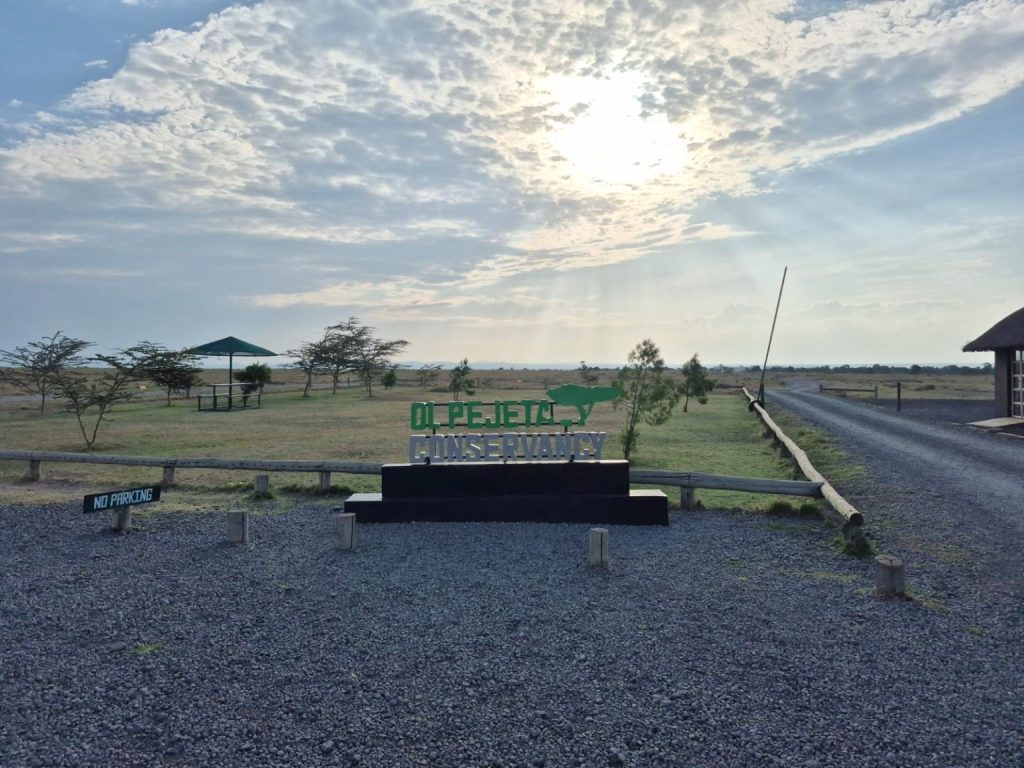
Arriving for a full day of exploring. Photo © Waihuini.com.
We paid our entry fees at reception before starting the safari.
For anyone planning a self-drive, this is where I’d take a few minutes to go through the map and guidelines. Ask staff which roads suit your vehicle, whether any tracks are closed and where you can find toilets and designated places to eat.
You can check the official Ol Pejeta map before travelling, then confirm the current advice on arrival.
We used a four-wheel drive, but I’d still ask about conditions rather than assume every route would be suitable. Knowing where you’re going also helps you spend more time watching animals and less time wondering which turning you should have taken.
With the practical things sorted, we headed towards Sweetwaters Chimpanzee Sanctuary.
Our First Stop: Sweetwaters Chimpanzee Sanctuary
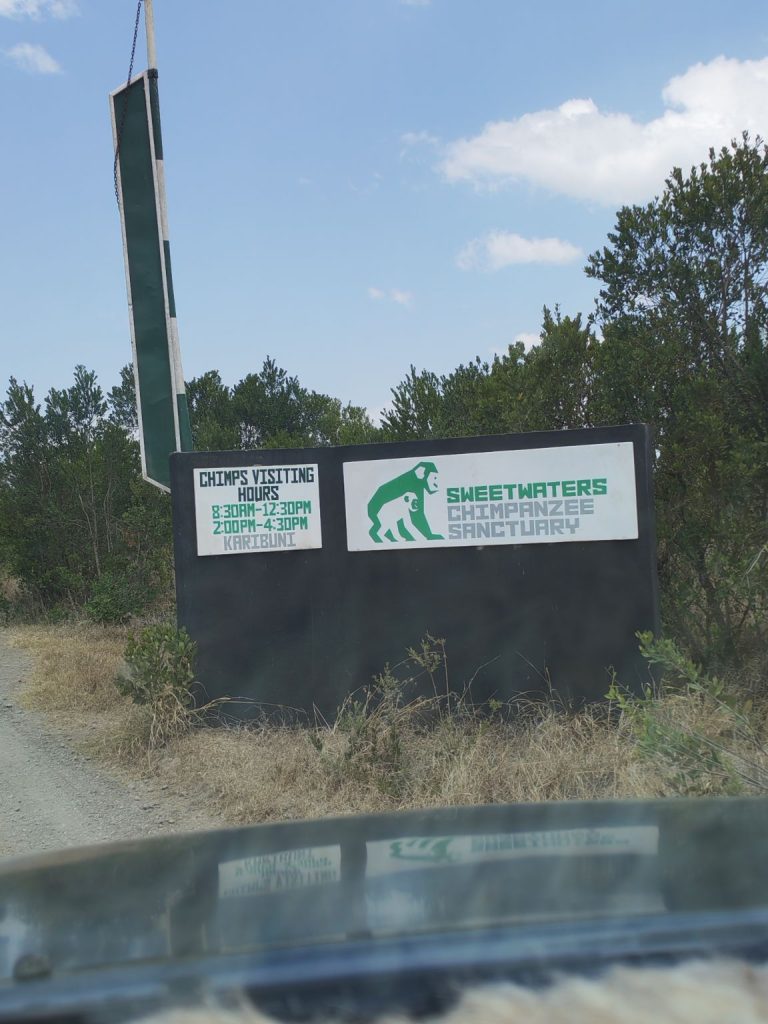
Our first stop: Sweetwaters Chimpanzee Sanctuary. Photo © Waihuini.com.
Guides were waiting to welcome visitors at Sweetwaters Chimpanzee Sanctuary within Ol Pejeta Conservancy. One walked us around, explaining its history and introducing the chimpanzees by name.
Their stories were difficult to hear. Before being rescued, they had been through deeply sad and disturbing experiences. Listening to the guide gave us a better understanding of why the sanctuary matters and the care these animals need.
Max stood out to me. He’s the chimpanzee sitting close to the fence in my photograph, with the others farther back among the grass and trees. Having someone tell us about their lives made us stop and look with a little more understanding.
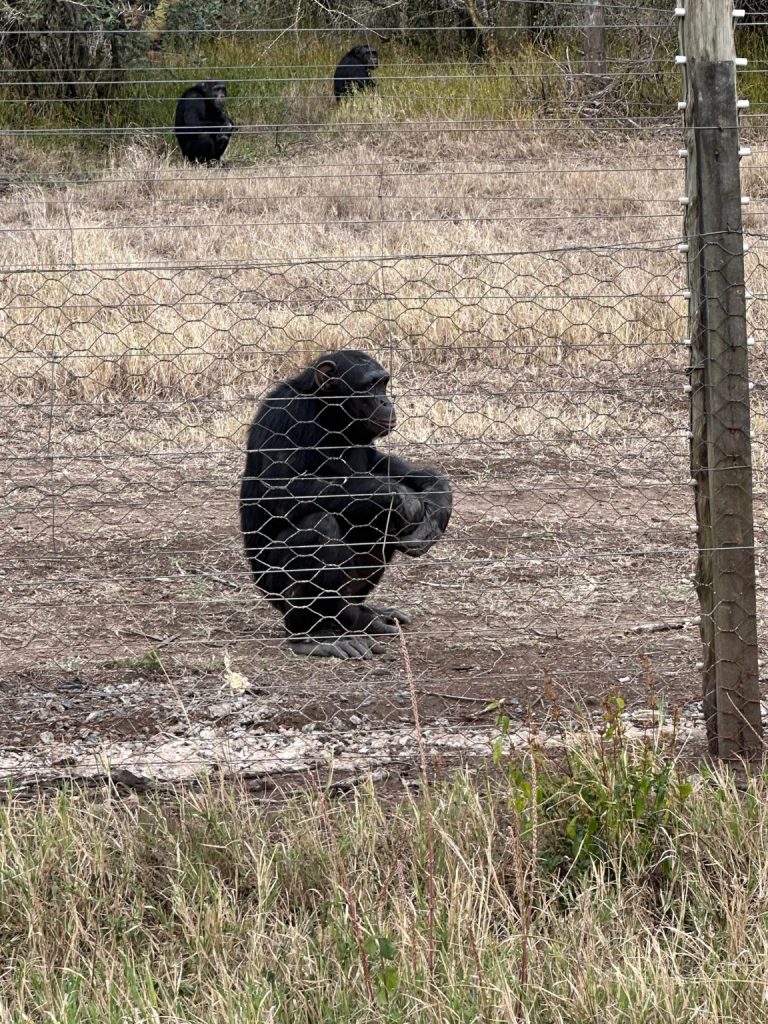
Meet Max, one of the chimpanzees whose name stayed with me after our tour. Photo © Waihuini.com.
Why are there chimpanzees in Kenya?
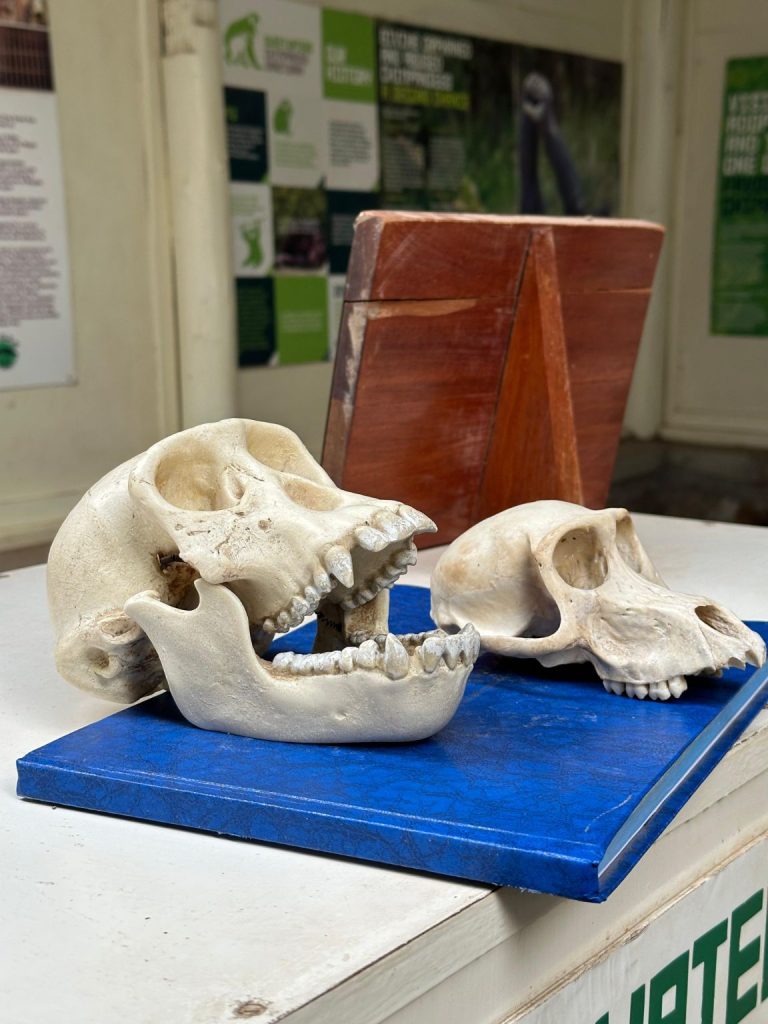
A closer look at one of the sanctuary’s educational displays. Photo © Waihuini.com.
Chimpanzees aren’t native to Kenya. Sweetwaters opened in 1993 to provide refuge for rescued chimpanzees, through an agreement involving Ol Pejeta, the Kenya Wildlife Service and the Jane Goodall Institute.
The sanctuary provides long-term care and protection. That background adds meaning to the visit, especially when the guide explains the individual histories behind the animals you’re watching.
Plan around the sanctuary’s midday break
The published visiting hours are 8:30 a.m.–12:30 p.m. and 2:00 p.m.–4:30 p.m. Standard sanctuary admission is included in conservancy entry.
Between 12:30 and 2:00 p.m., the sanctuary closes to general visitors. So yes, the chimpanzees get a break from us too.
Ol Pejeta confirms that they have scheduled feeding times, although its website doesn’t specifically describe the entire closure as lunch. The useful thing to remember is to arrive during one of the visiting sessions.
Exploring Ol Pejeta Conservancy by Car
After the sanctuary tour, we continued on our own.
We spent the day following the permitted roads, looking across the grassland and checking the shade beneath trees. Having our own vehicle meant we could stop and watch without feeling that we needed to hurry through every sighting.
There was plenty to keep us occupied between stops too. With snacks and good company, even the searching was enjoyable.
Watching the elephants drink
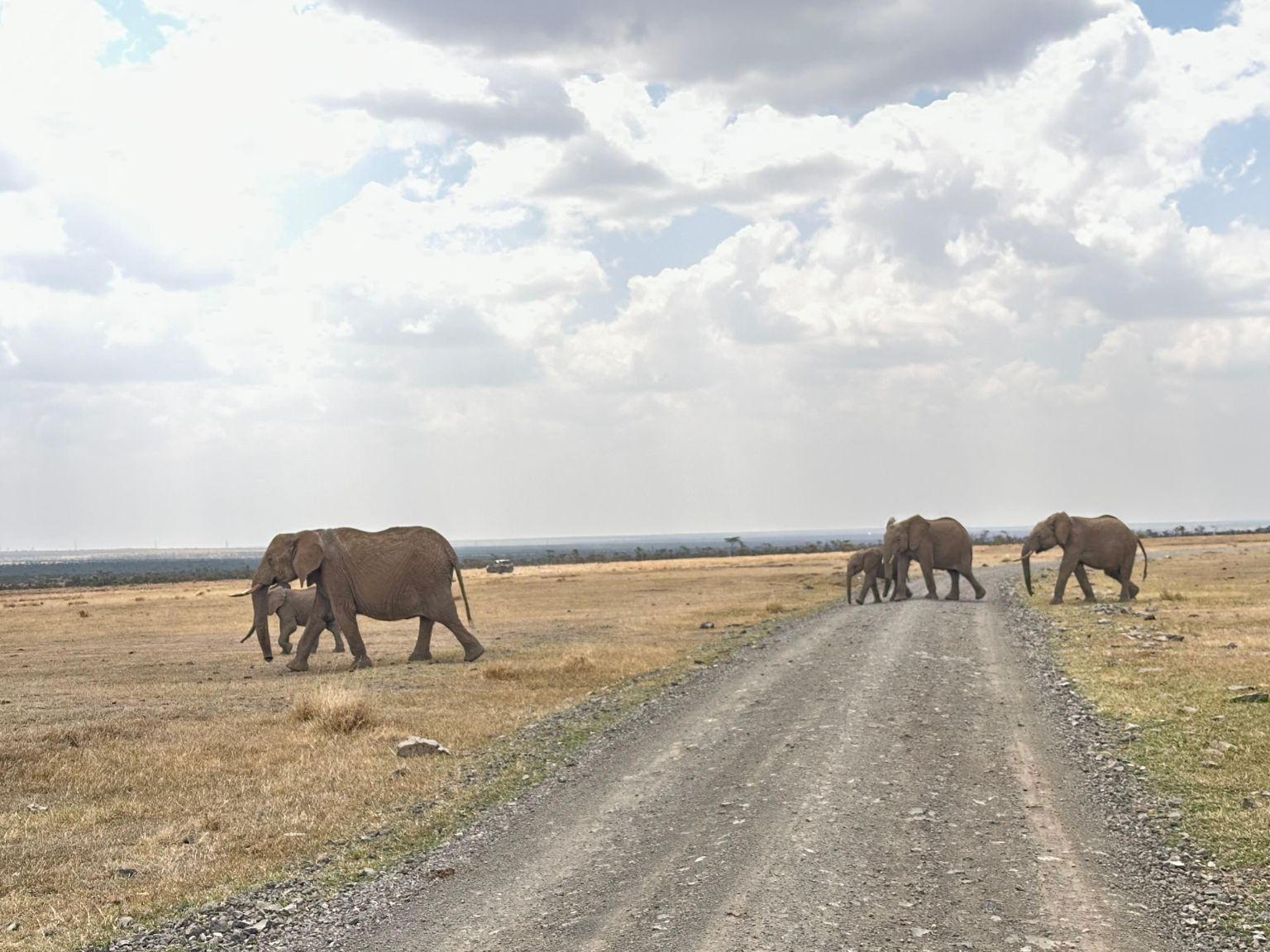
We stopped near a stone water trough where elephants had gathered to drink, with calves among the adults.
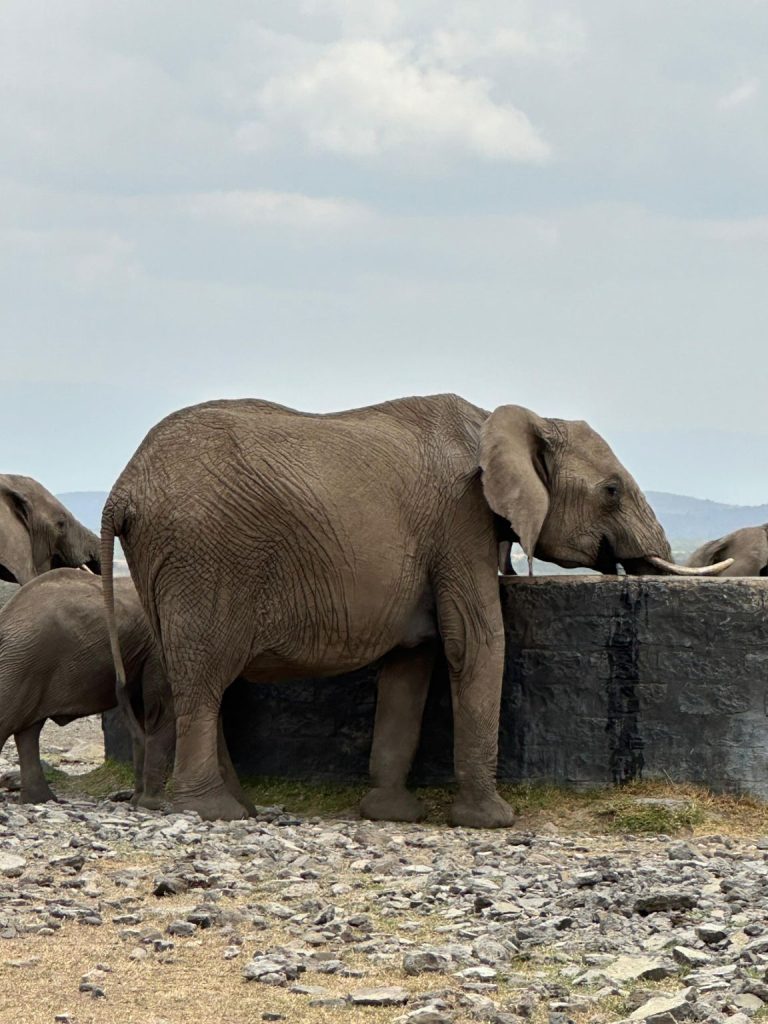
We stopped to watch the elephants quench their thirst before they moved on. Photo © Waihuini.com
For a while, we simply watched them quench their thirst. From there, I could see the folds in their skin, their broad ears and the curve of their tusks. I took a closer photograph, but I’m glad we stayed after getting the picture.
Once they moved away from the trough, we watched them cross the gravel road and head back into the open grassland. Seeing the adults and calves together made me want to fit the whole scene into one frame.
That wide photograph captures the moment beautifully: the road ahead, elephants crossing and open space all around them.
We gave them room and waited until they had passed. For once, being held up on the road was part of the fun.
A beautiful giraffe—and something I hadn’t thought about
One of my favourite moments at Ol Pejeta Conservancy was watching this beautiful giraffe move towards the water.
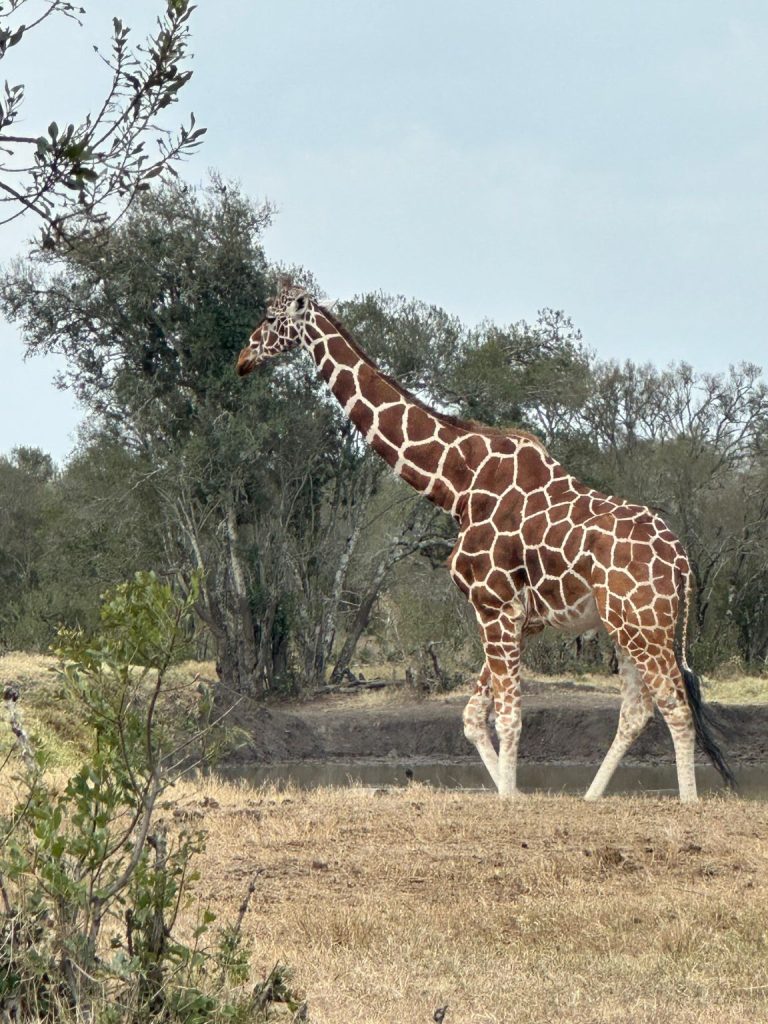
Such a beautiful animal—and we stayed to watch what happened next. Photo © Waihuini.com.
Then its front legs went wide apart, and down went the neck.
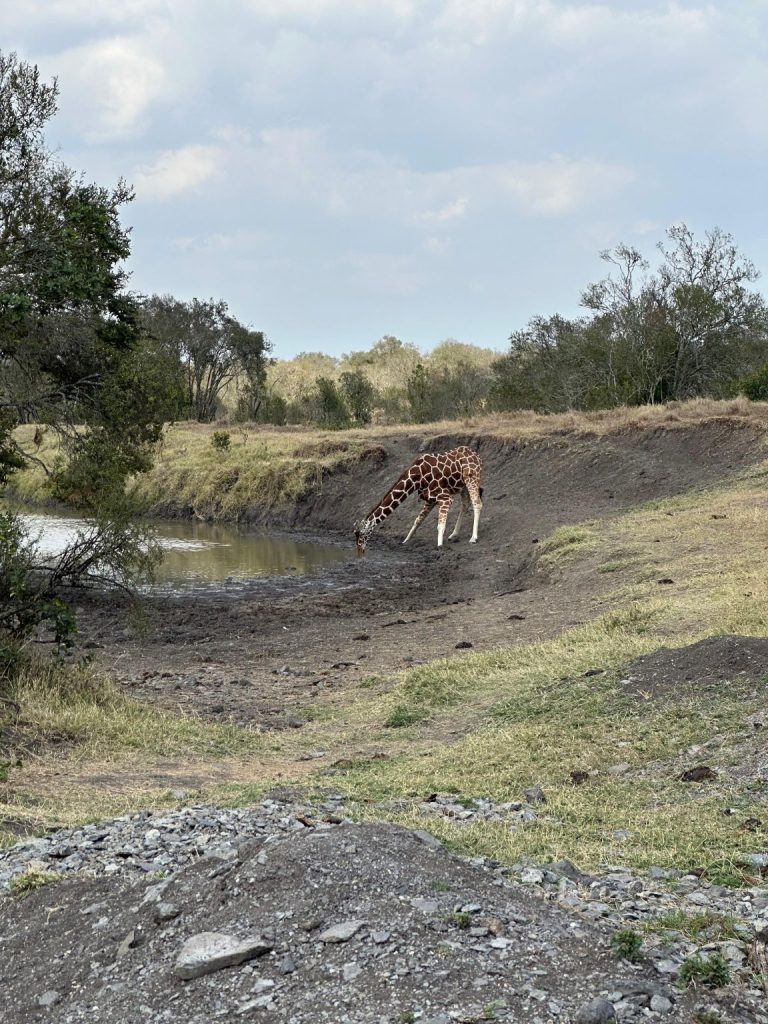
I hadn’t realised how much effort went into getting a drink. Photo © Waihuini.com.
To be honest, I’d never thought about how giraffes drink water. I just assumed that long neck had the situation covered. Watching it lower itself towards the water, I suddenly understood that being so tall comes with a few complications.
My two photographs show the same giraffe: first standing beside the trees, then bending down for a drink. I’m glad we waited long enough to see both.
Finally finding the lions
The lions were the hardest to spot. We drove around for quite a while, searching beneath trees and through the grass. With snacks being passed around and good company in the car, though, there was never a dull moment.
Then, finally, there they were.
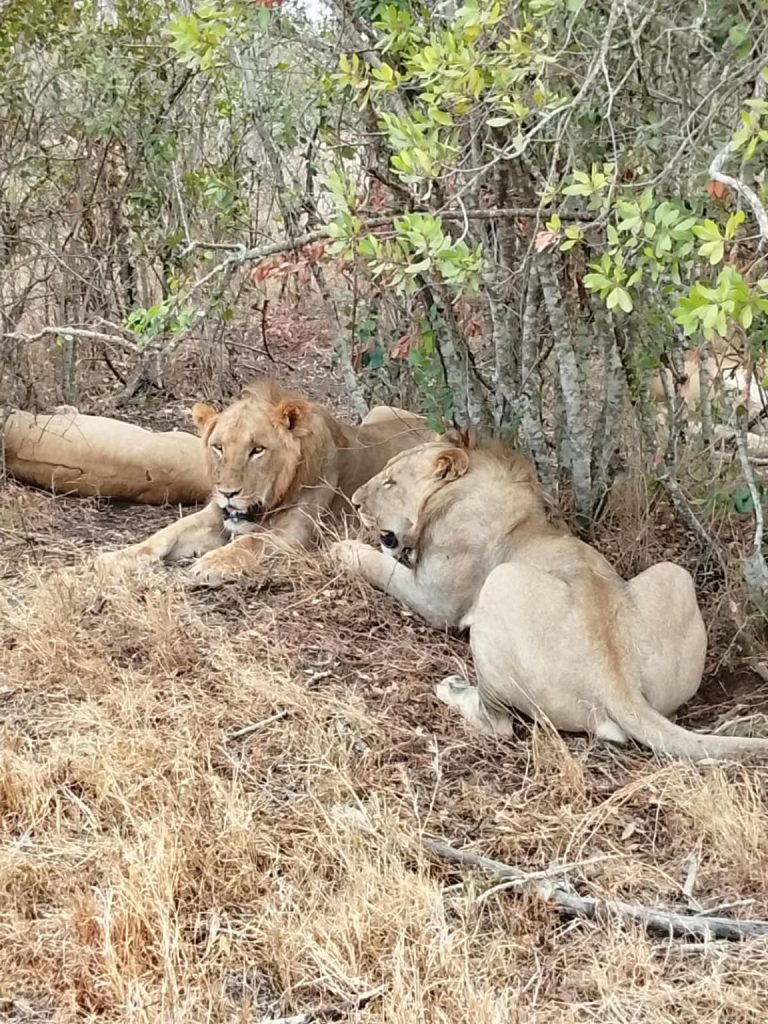
After quite a search, this was worth the wait. Photo © Waihuini.com.
That first glimpse had me saying, wow. Real lions, right there beneath the trees. After all that searching, I couldn’t stop looking. They blended so well into the dry grass and branches that I could see how easily we might have missed them.
We stopped to watch. One looked ahead while another rested beside it, completely at ease in the shade. I was excitedly taking photographs while they carried on with their afternoon as though finding them hadn’t just made ours.
Warthogs, Zebras, Antelope and a Hippo
Between the bigger sightings at Ol Pejeta Conservancy, we spotted warthogs beneath a tree, zebras out on the grassland and antelope beside the road.
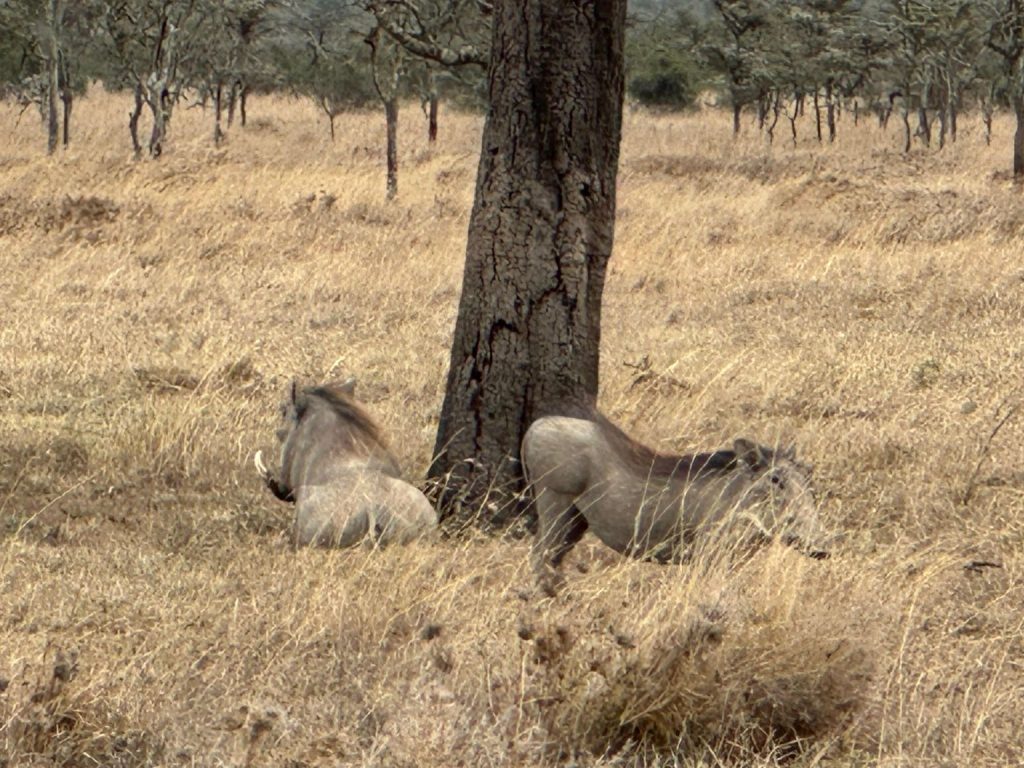
A pair of warthogs among the day’s sightings. Photo © Waihuini.com.
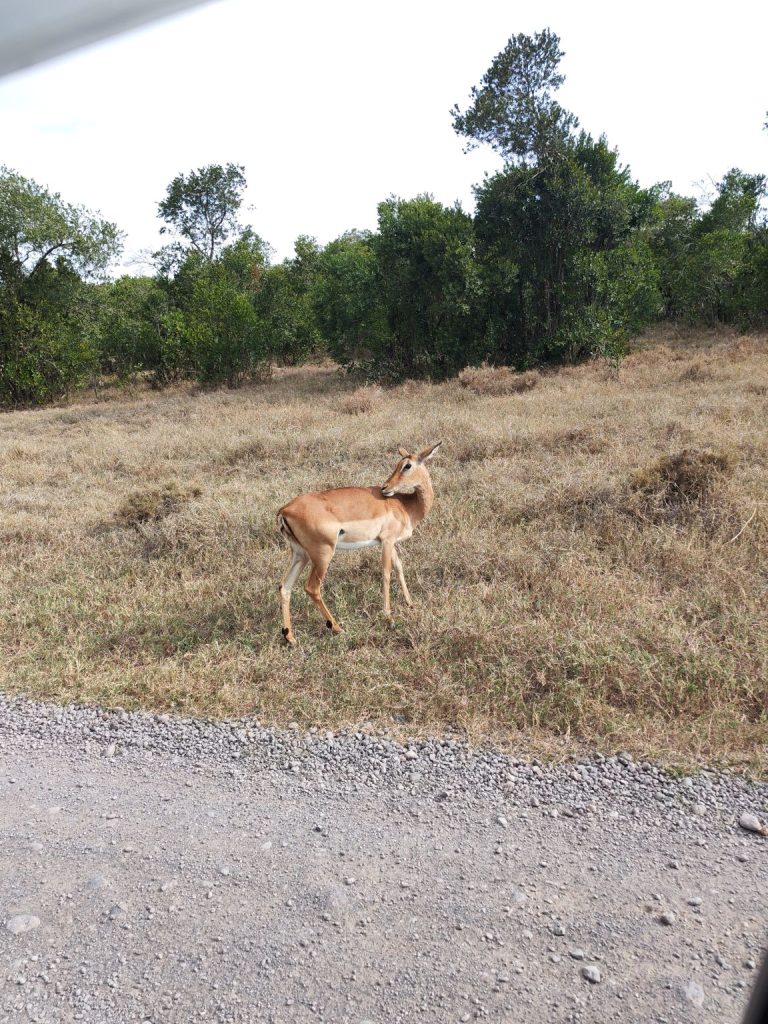
Another reason to keep looking beside the road. Photo © Waihuini.com.
Out on the open grassland, we watched a group of zebras. Some kept their heads down grazing, while one faced our direction. Their stripes stood out beautifully against the dry grass, making this another lovely stop for photographs.
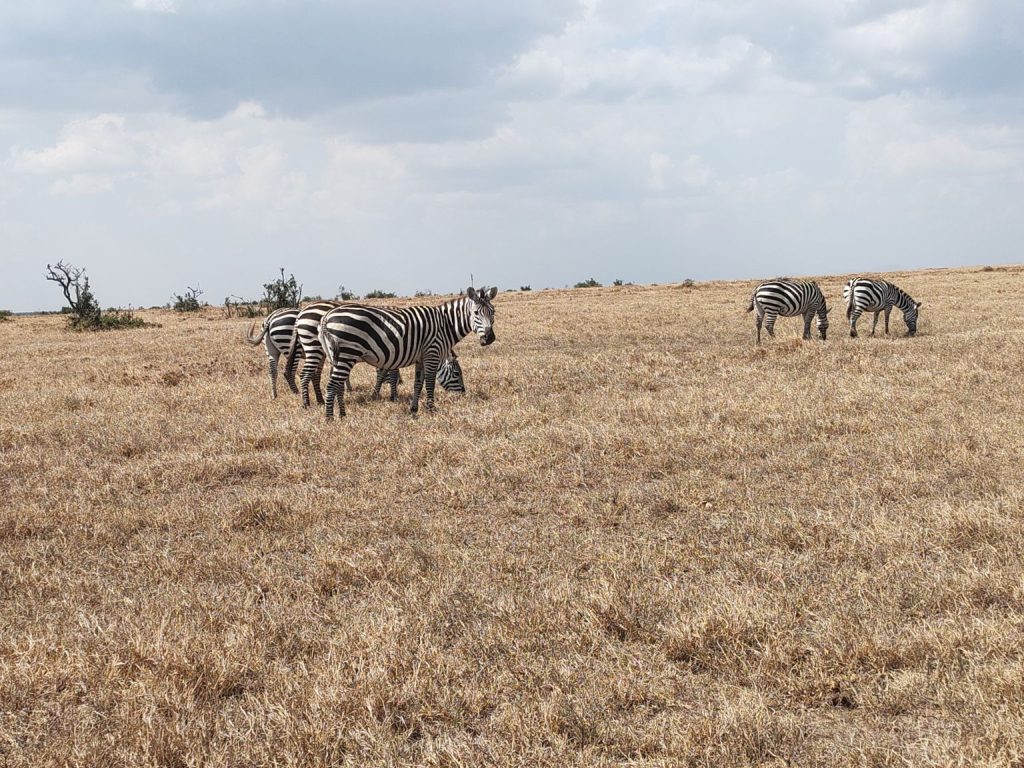
Zebras out on the open grassland during our self-drive safari. Photo © Waihuini.com.
At the water, a hippo was mostly submerged, with only part of its head and back showing. From zebras in full view to a hippo barely above the surface, the day kept giving us reasons to look a little longer.
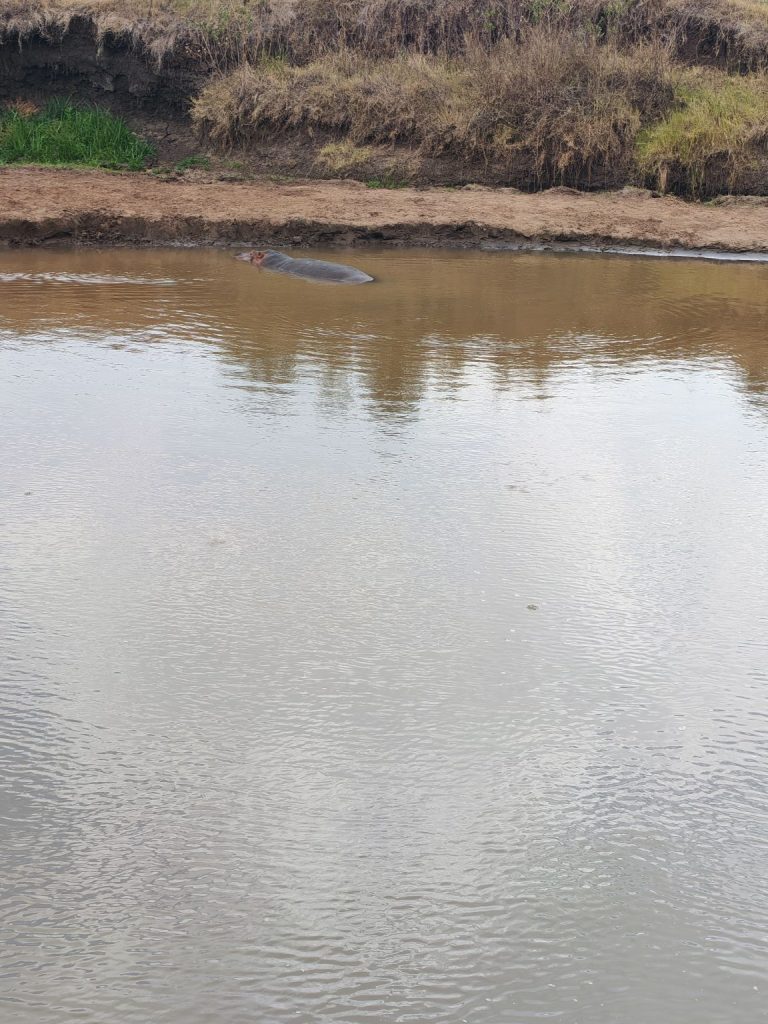
A little harder to spot: the hippo keeping mostly beneath the water. Photo © Waihuini.com.
Those sightings kept us paying attention. It was tempting to focus on finding lions or elephants, but there was plenty else to notice between them.
Stopping at the Equator
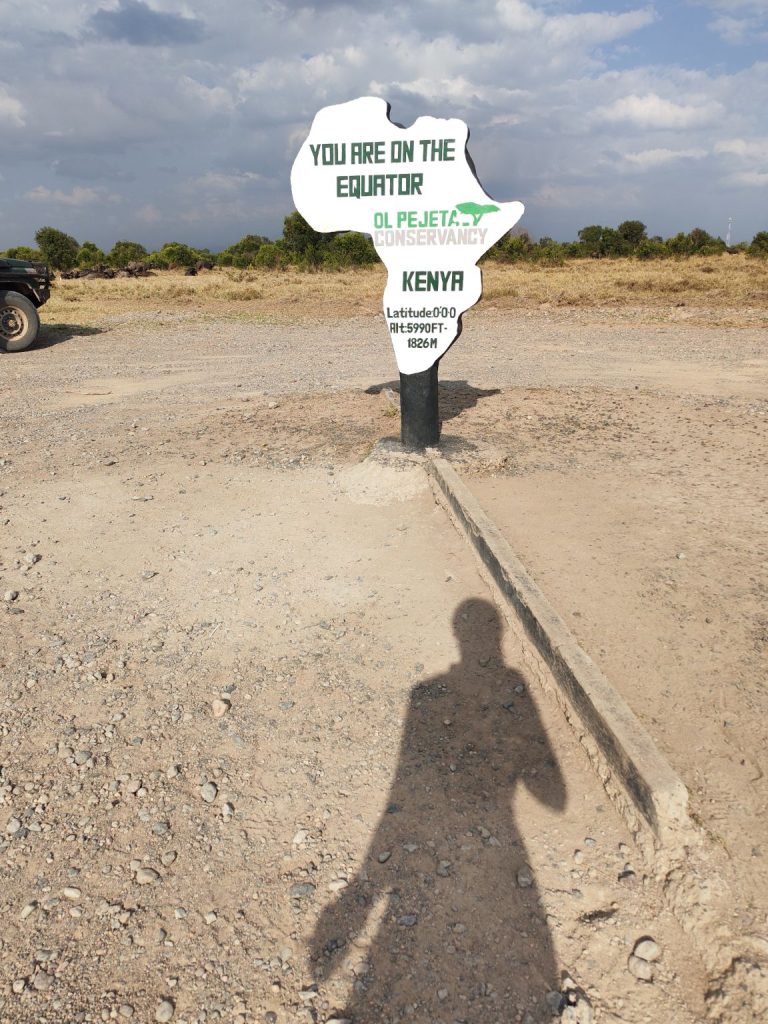
A stop at the Equator, with my shadow making a guest appearance. Photo © Waihuini.com.
We also stopped at the Equator marker inside Ol Pejeta Conservancy, shaped like Africa, with “You are on the Equator” written across it.
Nearby, a signpost points towards cities around the world, including London, Paris, Rome, Berlin and Tokyo. It made a different kind of stop after spending so much time looking for wildlife.
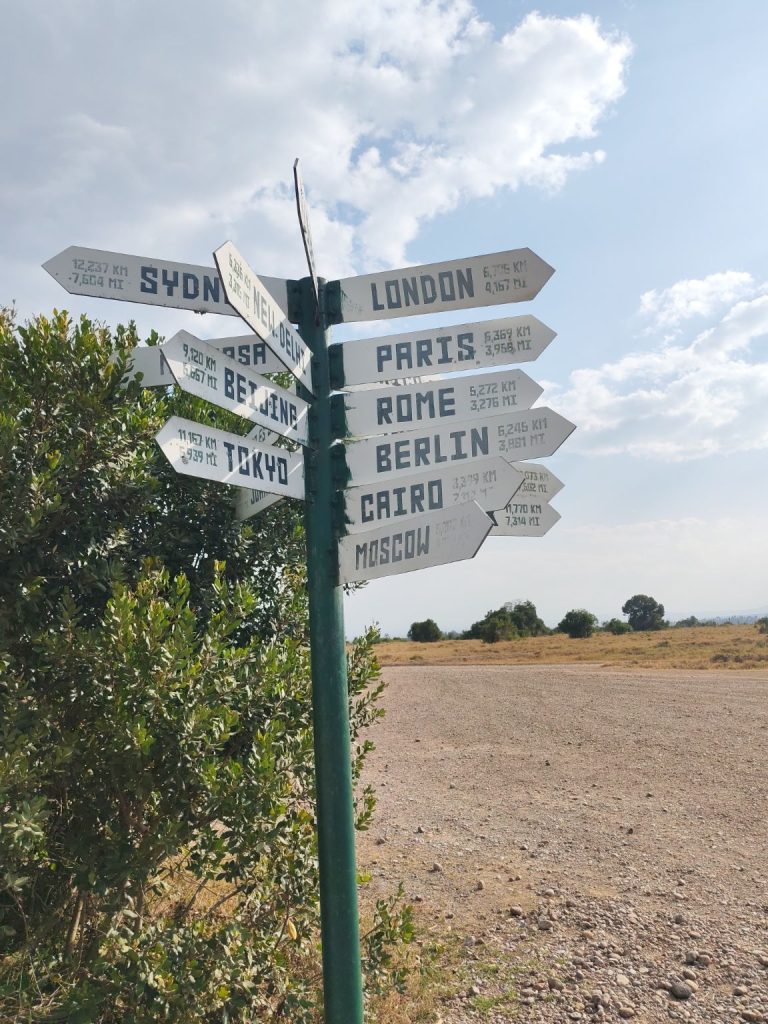
A little perspective on how far we were from everywhere else. Photo © Waihuini.com.
At least the signpost stayed still for its photograph.
My shadow made it into the Equator picture too. Not quite a holiday portrait, but proof I was there all the same.
A Huge Herd of Buffalo on Our Way Out
On our way out of Ol Pejeta Conservancy, we came across a huge herd of buffalo. We were nearing the end of our day, but seeing so many together was spectacular. The journey home could wait a little longer.
We stayed in the vehicle and watched them grazing. I took one photograph of a buffalo with its head lowered to the grass, then another as it faced towards us. That second picture gives a clear view of its face and those impressive, curved horns.
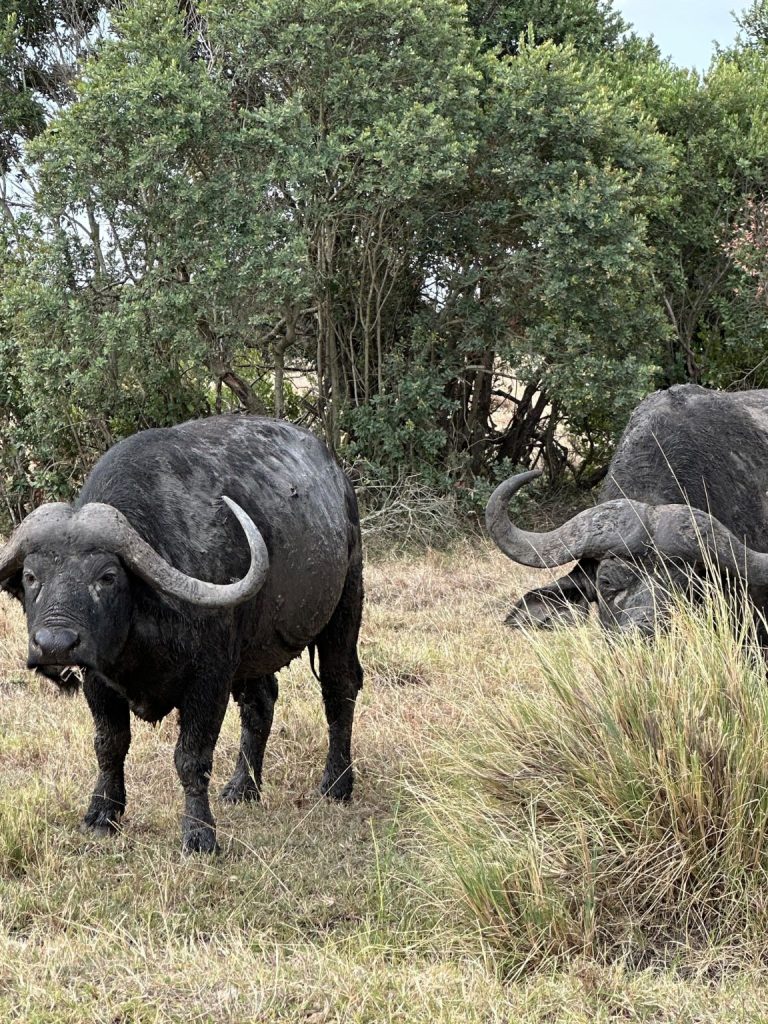
One last buffalo sighting before heading home. Photo © Waihuini.com.
After a full day of wildlife spotting, this was quite a farewell.
Planning Your Ol Pejeta Self-Drive Safari
Starting early and setting aside the whole day worked well for us. We could visit the sanctuary, explore and spend time watching animals without squeezing everything into a few hours.
If you’re planning a similar trip, these are the practical details I’d check before leaving.
Ol Pejeta Conservancy entrance fees
The following are the official 2026 rates, checked on 25 November 2026. They are planning prices, rather than a breakdown of our personal receipt.
- East African citizens: KSh 2,000 per adult and KSh 1,000 per child aged 3–11.
- East African residents: KSh 3,500 per adult and KSh 1,750 per child aged 3–11.
- Non-residents: US$110 per adult and US$55 per child aged 3–11.
Children under three enter free. Vehicle entry for up to six seats costs an additional KSh 1,000.
Day tickets are single-entry, so leaving and returning requires another entry payment. Check the official entrance fees before travelling, as rates can change.
For example, two adults and two children aged 3–11, all qualifying for East African citizen rates, would pay KSh 7,000 including one vehicle of up to six seats. Fuel, vehicle hire and optional experiences would be extra.
We paid at reception, but online booking is also available. The current tariff states that the gates are cashless, so have an appropriate payment method and the identification required for your visitor category.
Opening hours and planning your route
The official 2026 tariff lists gate hours of 7 a.m.–7 p.m., with entry and exit through Rongai and Serat gates.
I’d prepare food and check the vehicle before leaving, then fuel up on the way. At reception, go through the map and current road advice before heading to the chimpanzee sanctuary during its morning session.
Leave the rest of the day fairly open for wildlife viewing, a break in a designated area and any other stops you want to include.
Most importantly, allow enough time to return to the gate. Closing time shouldn’t be the moment you start working out how far away you are.
Food and breaks
I’d pack the sandwiches, fruit, nuts and snacks again. Having food with us gave us flexibility and meant we didn’t need to organise the whole day around buying lunch.
Ask reception where you can safely stop to eat. A quiet stretch of roadside isn’t somewhere to get out simply because no animals are visible.
Reusable containers, enough drinking water and a bag for rubbish are useful. If you’re travelling with children, familiar foods help keep lunch straightforward while there’s so much else happening around them.
Self-drive guidelines at Ol Pejeta Conservancy
Before setting off, make sure everyone in the car understands the rules:
- Keep within the 40 km/h maximum speed.
- Stay on designated roads and tracks.
- Remain inside the vehicle except in designated areas.
- Give wildlife priority and plenty of space.
- Never feed, chase or disturb animals.
- Take rubbish away.
- Leave bones, plants and other natural objects where they are.
- Keep off the vehicle roof.
- Obtain authorisation before using a private drone.
Ordinary driving is prohibited after 7 p.m. Follow the instructions given by staff and allow time to reach the exit.
What I’d bring
For a full day at Ol Pejeta Conservancy, I’d bring drinking water in reusable bottles, identification, any booking confirmation and the conservancy map.
A charged phone or camera, a power bank and binoculars, if available, would also be useful. Add sun protection, an extra layer, any medication needed during the day and somewhere to keep your rubbish.
Before leaving, I’d check the tyres, spare tyre and vehicle equipment, then save the conservancy’s contact details.
What About the Northern White Rhinos?
Ol Pejeta Conservancy protects Najin and Fatu, the last two northern white rhinos, and participates in assisted-reproduction research aimed at preserving them. Their conservation story is separate from the encounters shown in my photographs.
If meeting them is a priority, check the separately booked Meet the Northern White Rhinos experience. Don’t assume ordinary self-drive admission includes that visit.
Other organised options include night drives and lion tracking. You can compare them on the official experiences page.
Would I Visit Ol Pejeta Conservancy Again?
Yes. I liked having time to explore for ourselves, with the guided sanctuary visit adding a different perspective to the day.
The chimpanzees’ histories gave us plenty to think about. Out on the roads, there was the excitement of searching, finally finding the lions and watching animals carry on with their day around us.
Next time, I’d take much the same approach: leave early, fuel up in town, pack food and give ourselves time. I’d happily spend another day seeing what we could find.
For another side of the country, you can also read about Kenyan culture and traditions.
Have you visited Ol Pejeta? Would you choose a self-drive safari, or let someone else handle the driving while you look for animals?
Till next time, take care!
Photography © Waihuini.com.
The Waihuini Edit
Get new travel stories by email
Travel guides, destination ideas, practical tips and lifestyle stories, sent to your inbox when something new goes up. Free, and you can unsubscribe anytime.
We use your email only for this newsletter. It is sent with Kit, and you confirm by email first. Privacy Policy