
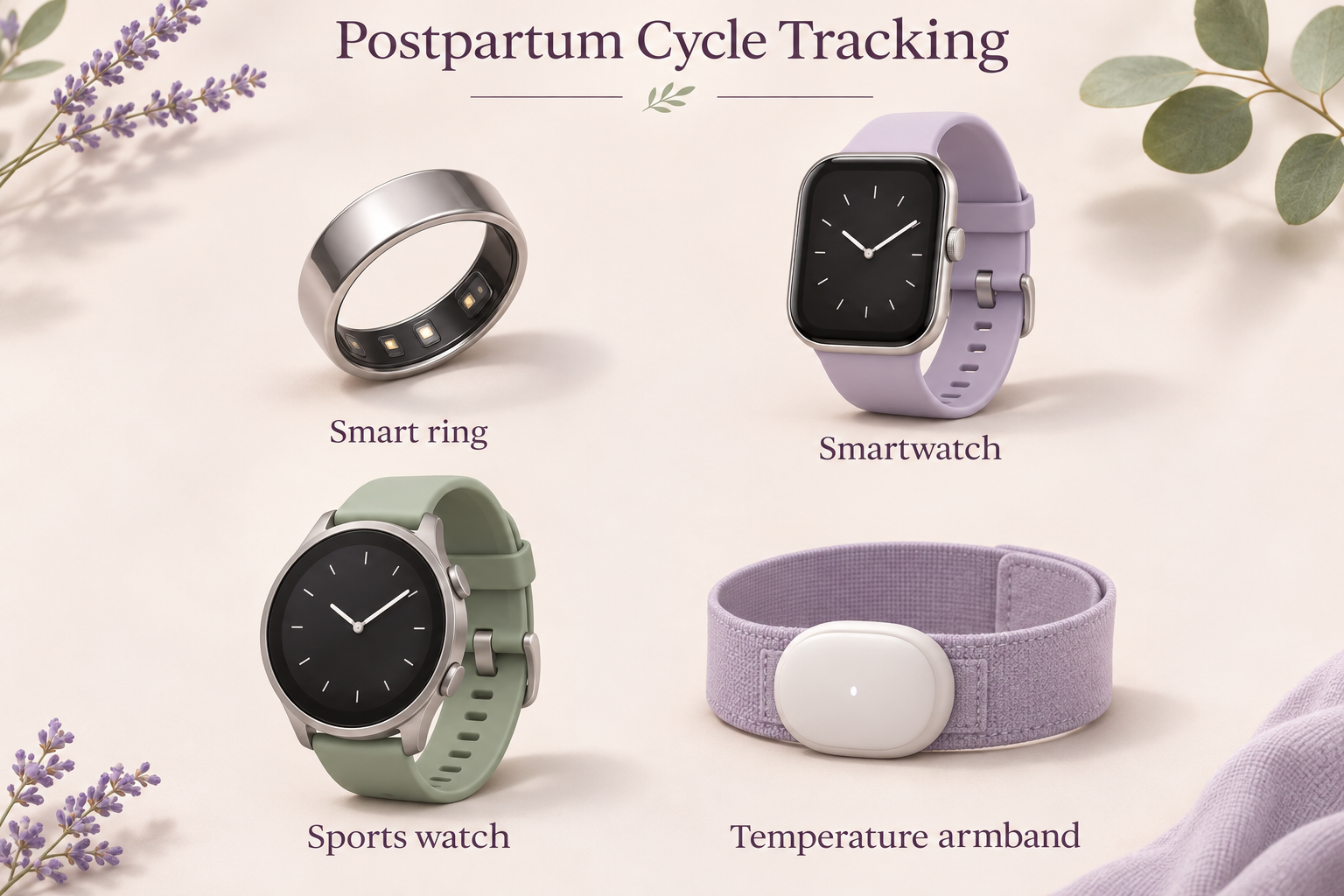
Finding the best wearable for postpartum period tracking starts with understanding what you want it to do. Perhaps you want a simple record of bleeding and symptoms. Alternatively, you may want overnight temperature trends or a device that connects with a fertility app.
Those are different needs, and one device won’t necessarily meet them all.
After childbirth, cycle tracking can feel less straightforward than it did before pregnancy. Breastfeeding, changing routines and the return of periods add context that a calendar prediction cannot fully capture.
My starting point is simple: a tracker should help you understand your records without making you feel that your body needs to follow a deadline.
This is a research-based comparison using medical guidance and manufacturer documentation. I haven’t personally tested these wearables for postpartum tracking.
Which Is the Best Wearable for Postpartum Period Tracking?
There is no single winner for everyone. Based on the documented features, these are the options I would shortlist:
| Option | Where it may help | Main postpartum limitation |
|---|---|---|
| Oura Ring | Overnight trends and cycle records in a ring format | Native period predictions pause after pregnancy until a new period is logged |
| Compatible Apple Watch | Cycle logging within Apple Health, alongside other health information | Native ovulation estimates require sufficient data and no ongoing cycle factors |
| Garmin | Cycle and symptom records alongside activity information | Garmin’s native cycle feature is not intended for conception or contraception |
| Tempdrop | Overnight temperature collection for people who want to chart | Temperature alone cannot establish which days are safe for unprotected sex |
| Compatible wearable with Natural Cycles | A separate app with postpartum-specific settings | Eligibility, supported devices and instructions must be checked for the chosen mode |
These are feature-based comparisons, rather than results from a head-to-head clinical trial in postpartum users. The distinction matters: a useful feature list does not establish which device predicts postpartum ovulation most accurately. support.ouraring.com
Why Periods After Birth Need a Different Approach
There is no universal date when periods return after childbirth.
According to the NHS guide to your body after birth, a first period may return as early as five to six weeks after birth with formula feeding or mixed feeding. With full breastfeeding, including at night, periods may stay away until feeding reduces. Early postpartum bleeding, called lochia, is also different from a menstrual period. NHS
That makes accurate logging important. If you’re unsure whether bleeding is lochia or a returning period, ask your midwife or doctor rather than entering a period simply to restart an app’s predictions.
Most importantly, ovulation can happen before your first period. The NHS explains that pregnancy is possible from three weeks after birth, including while breastfeeding and before periods return. A blank cycle calendar therefore does not mean pregnancy is impossible. NHS
What Wearables Can Actually Track
Depending on the device, a wearable can collect overnight skin-temperature measurements, sleep information and heart-rate data. Its companion app may also let you record bleeding, symptoms and relevant life changes.
However, keep three functions separate:
- Recording: saving what you observed, such as bleeding or symptoms.
- Estimating: using data to suggest when a period or ovulation may occur—or may have occurred.
- Contraception: following the instructions of a suitable birth-control method.
Temperature measured at the finger, wrist or upper arm is not automatically interchangeable. Each system uses its own sensor placement and processing.
Likewise, a temperature pattern is not a direct hormone measurement. More data can create a useful record, but it does not automatically produce a reliable fertility prediction.
For the app side of tracking, you can also read my guide to period-tracking apps.
Oura Ring: Overnight Trends in a Ring Format
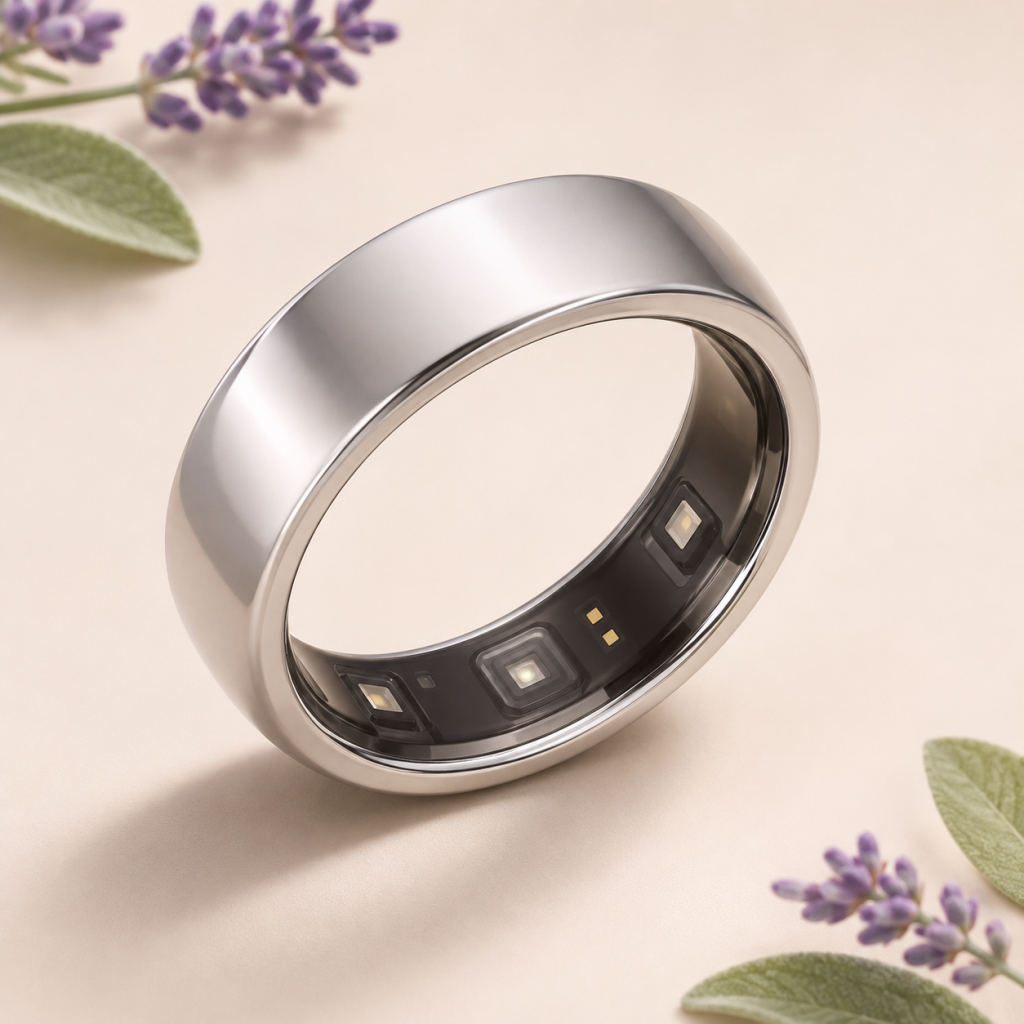
Generic smart ring illustration, not an Oura product photograph. For Waihuini.com.
Oura is worth considering if you prefer wearing a ring overnight rather than a watch.
Its native Cycle Insights feature uses temperature trends and logged periods to provide cycle information. The documented feature requires a supported ring and an active membership.
However, its postpartum behaviour is especially important. Oura explains that, after pregnancy, it pauses period predictions and logging reminders until you log a new period. Cycle phases and conception estimates remain unknown until cycling resumes. This means you should not buy it expecting a dependable countdown to your first postpartum period. support.ouraring.com
I would consider Oura primarily for the broader overnight record, with cycle features becoming more relevant as periods return.
Before buying, check the Oura Pregnancy Insights guidance, membership requirements and current device compatibility.
My assessment: a reasonable shortlist option for someone who wants a ring and values trends, provided they understand the limits before cycles resume.
Apple Watch: A Practical Option for Apple Health Users
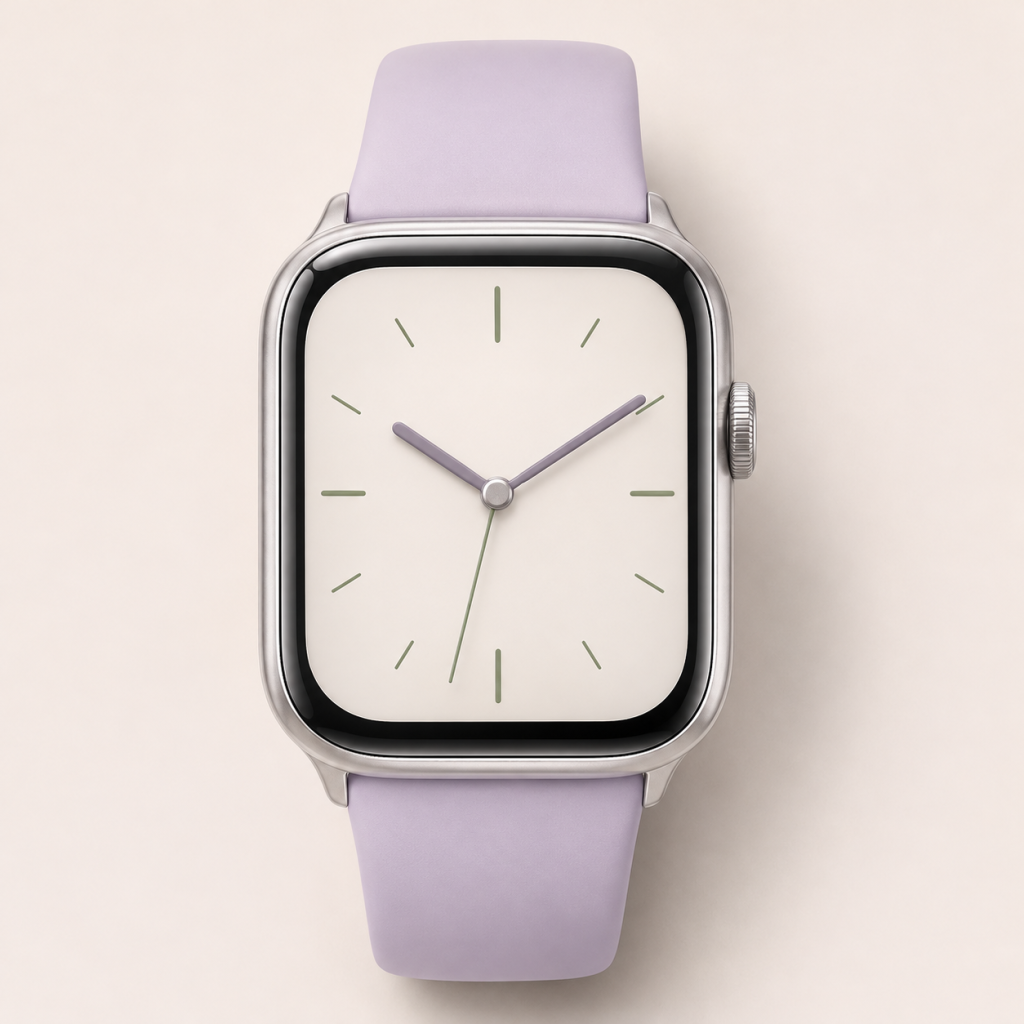
Generic smartwatch illustration, not an Apple product photograph. for Waihuini.com.
If you already use an iPhone, Apple’s Cycle Tracking offers a place to record periods, spotting and symptoms. You can also log factors such as pregnancy, lactation and contraceptive use.
Compatible Apple Watch models can supply wrist-temperature data for retrospective ovulation estimates. “Retrospective” means the estimate concerns an event that may already have happened; it is not advance confirmation of your fertile days. Apple Support
Apple’s instructions require sufficient overnight measurements, Sleep Focus and no ongoing cycle factors for native ovulation estimates. Its guidance describes a baseline requiring at least four hours of Sleep Focus per night for five nights, while estimates can take around two cycles of use to become available.
Apple also states that an estimate does not guarantee ovulation occurred and that Cycle Tracking should not be used for birth control. Apple Support
For postpartum use, I would value the logging tools first. Don’t remove an accurate lactation entry just to unlock predictions.
My assessment: start here if you already own a suitable watch and want your records within Apple Health. Buying another device may add little if your main need is simply logging.
See Apple’s ovulation-estimate requirements before choosing a model.
Garmin: Cycle Records Alongside Activity
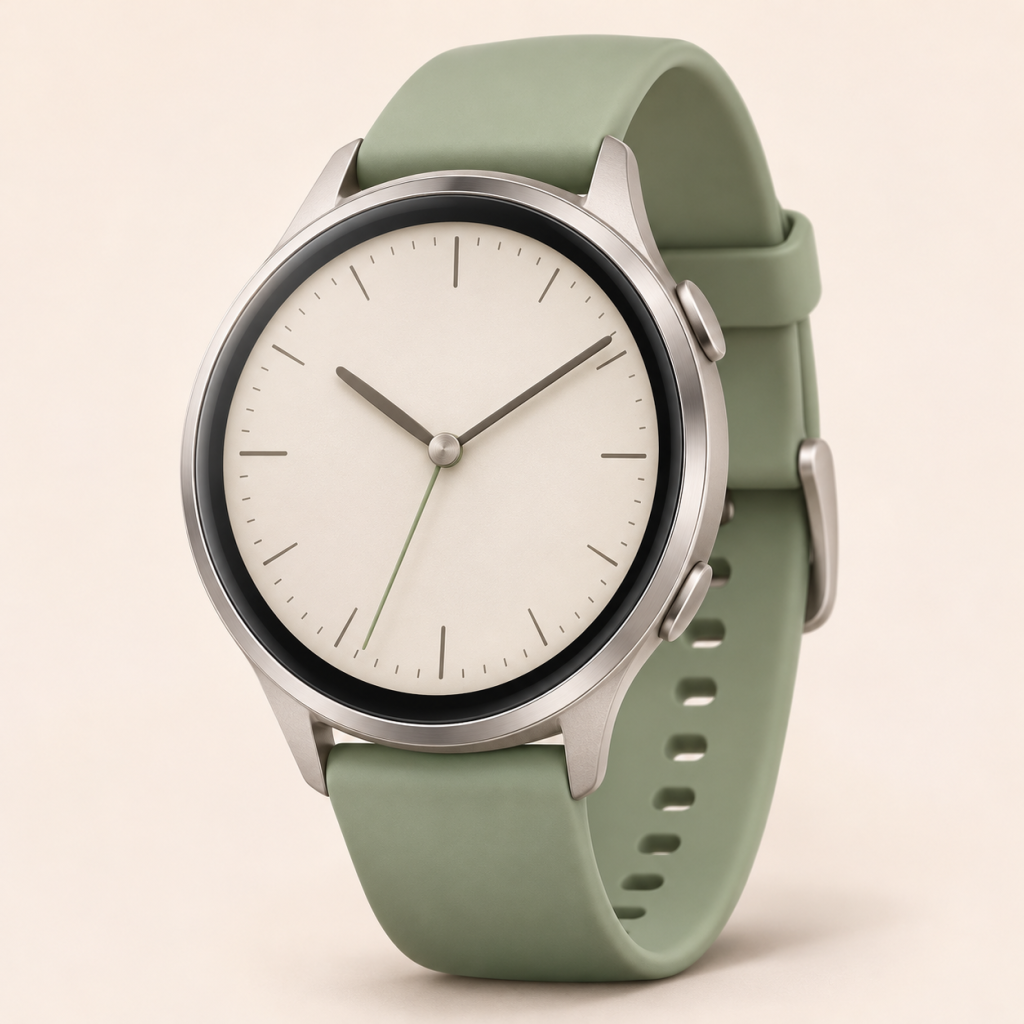
Generic sports watch illustration, not a Garmin product photograph. for Waihuini.com.
Garmin offers menstrual-cycle and symptom tracking through Garmin Connect. Its women’s-health documentation includes options for different cycle circumstances, including irregular cycles.
However, Garmin explicitly says its native menstrual-cycle feature should not support conception, contraception or birth control. Treat it as a record-keeping and awareness feature. Garmin
That may suit someone who already wears a Garmin for activity and wants fewer separate tools.
My assessment: an existing Garmin can be useful for keeping notes alongside your other records. Its native calendar is not a substitute for postpartum fertility guidance.
There is also an important distinction between Garmin’s own feature and a separate Natural Cycles integration. Support for one does not imply that every Garmin watch supports the other.
Tempdrop: For People Who Want to Chart Temperature
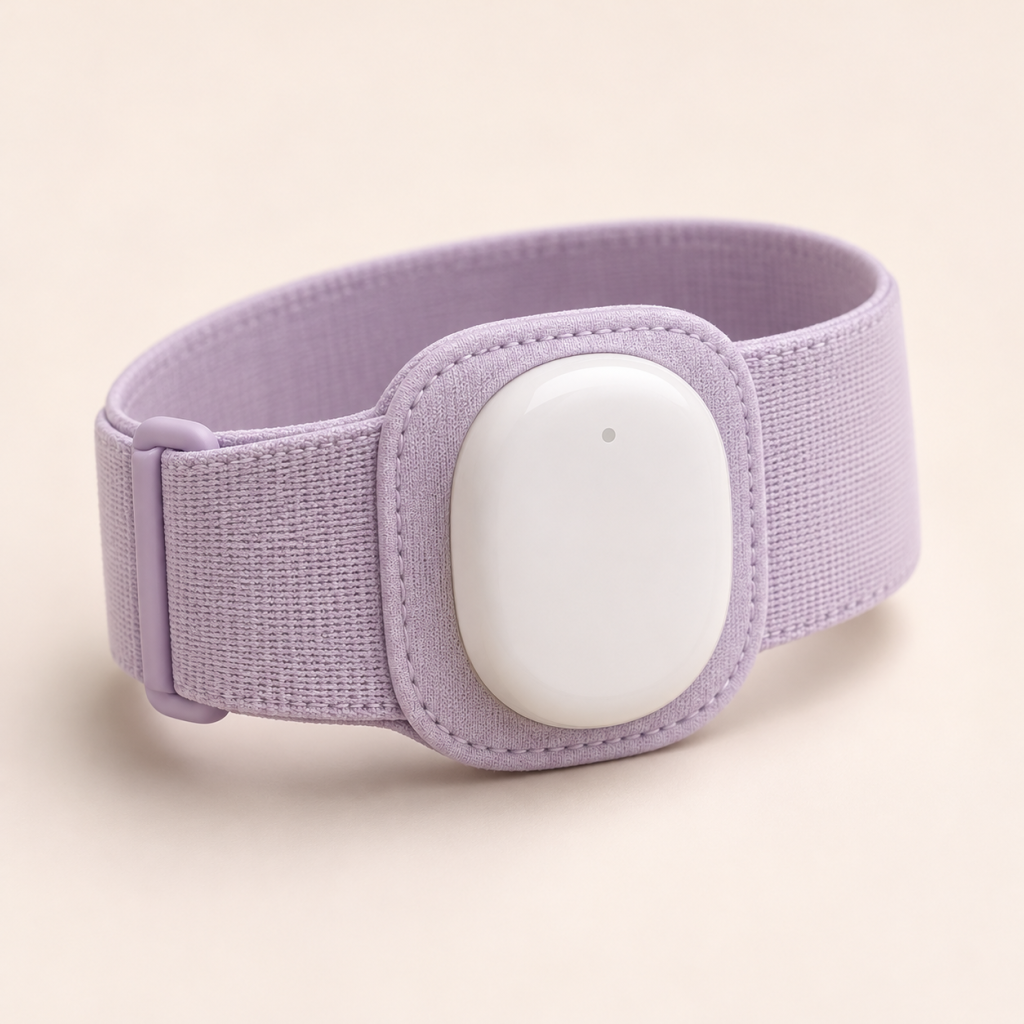
Generic temperature armband illustration, not a Tempdrop product photograph. For Waihuini.com.
Tempdrop is an overnight temperature sensor worn on the upper arm. The manufacturer specifically discusses its use when postpartum users wake frequently during the night.
That makes it relevant if your priority is collecting temperature data without taking a manual waking temperature each morning. However, manufacturer claims about convenience should not be read as proof that it can reliably predict the first postpartum ovulation. FAQS and Contact
If you plan to use a fertility-awareness method, ask a qualified instructor about postpartum rules and whether the device fits that method.
My assessment: consider it if you actively want to chart, rather than simply receive a predicted period date.
Also, Natural Cycles explicitly advises against manually entering temperature measurements extracted from unsupported wearables, including Tempdrop. Natural Cycles
Best Wearable for Postpartum Period Tracking: App Connections
Integration deserves a closer look before you spend money.
Oura documents connections through Apple Health and Android Health Connect. However, connecting two apps does not mean every measurement, symptom or prediction transfers between them. Check the supported data types and permissions. support.ouraring.com
Natural Cycles is a separate service with its own supported-device list. Its current documentation includes Oura, compatible Apple Watch and selected Garmin and WHOOP devices, alongside its own measuring devices.
Compatibility is model-specific. Therefore, check the official Natural Cycles wearable list rather than assuming any temperature-sensing wearable will work. Natural Cycles
Natural Cycles also documents an optional postpartum mode with recovery check-ins and information about returning fertility. That offers more specific postpartum context than a generic cycle calendar, but the app’s current instructions still govern its use. Natural Cycles
Choosing the Best Wearable for Postpartum Period Tracking While Breastfeeding
While breastfeeding, I would prioritise a device that lets you record your circumstances accurately and remains useful when predictions are unavailable.
A practical checklist is:
- Can you log lactation or a recent pregnancy?
- Can you keep symptom records without entering a period?
- Does the app explain missing predictions clearly?
- Can you collect data comfortably during your actual sleep routine?
- Can you export useful records for a healthcare appointment?
Natural Cycles says users can start after pregnancy and while breastfeeding, but irregular cycles can mean more days flagged as potentially fertile when using its birth-control functions. Read its breastfeeding instructions carefully. Natural Cycles
Breastfeeding alone is not a general guarantee against pregnancy. The lactational amenorrhoea method has specific criteria; ask a clinician whether they apply to you. ACOG
Choosing the Best Wearable for Postpartum Period Tracking: Cost and Privacy
When choosing the best wearable for postpartum period tracking, consider the full subscription cost and how much personal information you want to share.
Before choosing, look beyond the headline promise.
Accuracy: ask whether evidence concerns postpartum users specifically. A study of regular cycles cannot automatically answer questions about breastfeeding or the first ovulation after birth.
Cost: compare the device, membership, separate fertility-app subscription and replacement costs. Check which features remain available if you cancel.
Privacy: review account deletion, exports, cloud storage and third-party sharing. Connecting another app creates another relationship to understand.
Apple describes end-to-end protection for Health data synced to iCloud when the relevant security requirements are met. Oura also provides deletion controls, but turning off women’s-health features does not itself delete the existing data. Apple Support
These details matter as much as a polished chart.
Which Option Would I Shortlist?
For the best wearable for postpartum period tracking, my choice would depend on the goal:
| Your priority | My starting point |
|---|---|
| Simple bleeding and symptom records | Try an app you already have before buying hardware |
| Apple Health convenience | A compatible Apple Watch |
| Overnight trends in a ring | Oura, with realistic expectations about paused predictions |
| Activity and cycle notes together | Your existing Garmin |
| Detailed temperature charting | Investigate Tempdrop and suitable charting guidance |
| A postpartum-specific app experience | Compare Natural Cycles’ current modes and supported devices |
I would not buy any of them solely for a promise of identifying “safe days” before periods return.
A useful tracker should fit your life and explain uncertainty clearly.
Frequently Asked Questions
Can a wearable predict my first postpartum period?
Don’t treat that as a dependable promise. Oura explicitly pauses postpartum predictions until a new period is logged, while Apple’s ovulation estimates require suitable data and settings. support.ouraring.com
Is Oura better than Apple Watch after birth?
There isn’t a universal winner. Oura offers a ring format, while Apple Watch fits naturally within Apple Health. Neither feature comparison establishes superior postpartum prediction accuracy.
Can I use these devices as contraception?
Native Apple Cycle Tracking and Oura Cycle Insights are not birth-control methods. A separate regulated app must be used according to its own instructions and eligibility requirements. Apple Support
Do I need a wearable at all?
No. If your main goal is noting bleeding, symptoms and questions for appointments, a simple app or notebook may be enough.
What if I’m worried about bleeding or recovery?
Seek medical advice rather than waiting for a device alert. The NHS postpartum recovery guide explains changes after birth and when to get help. NHS
Finding Support That Fits Your Life
The best wearable for postpartum period tracking is the one that meets your actual needs without promising certainty your body’s data cannot provide.
Start with the information you want to record. Then consider comfort, compatibility, cost and privacy.
You don’t need perfect charts to deserve clear answers about your health. A wearable can help you collect information, while your midwife or doctor helps put concerns into context.