
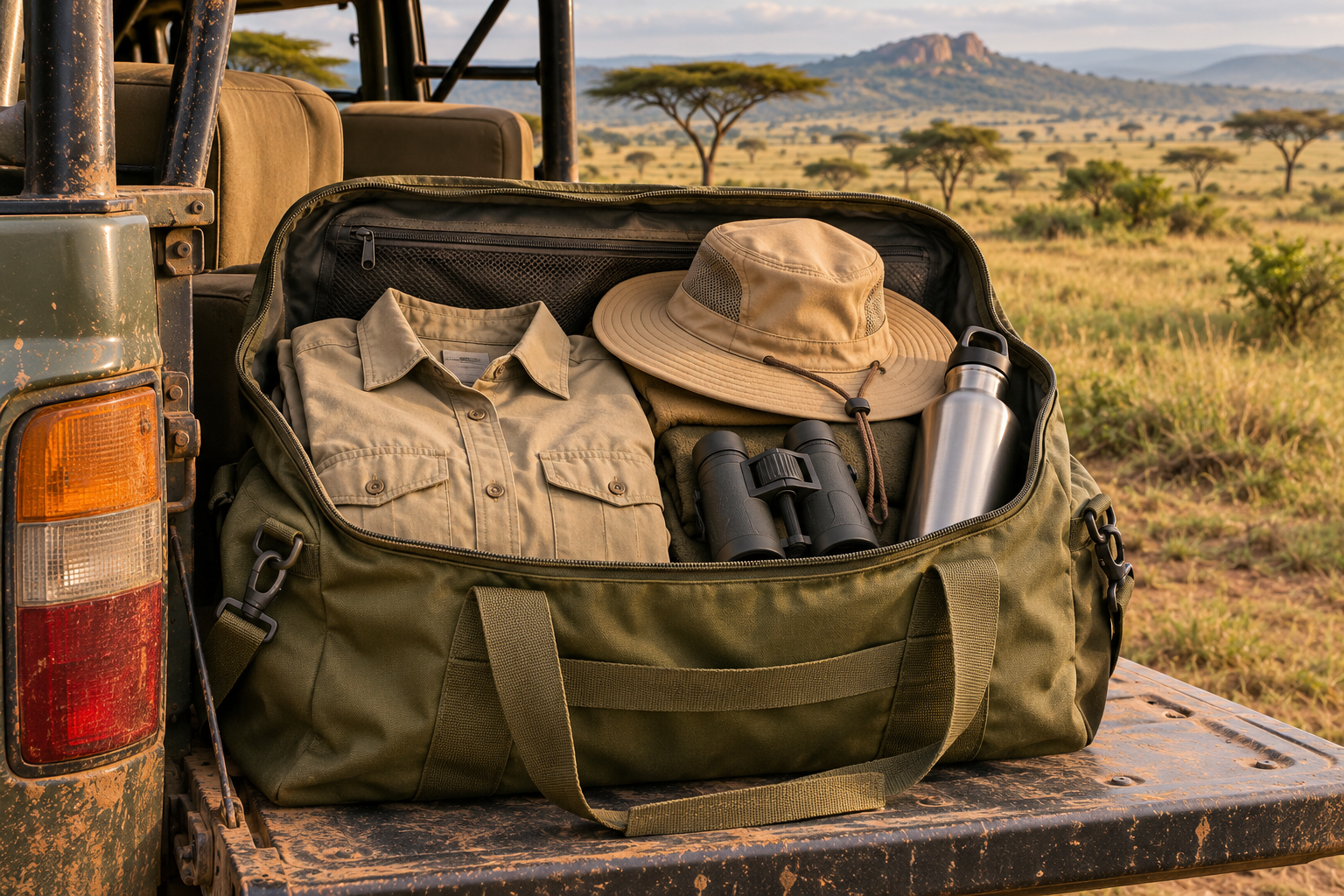
Preparing for an African safari is incredibly exciting, and having a well-organised Kenya safari packing list can make your adventure even more enjoyable. From watching elephants roam freely to spotting giraffes feeding on acacia trees, there is something truly special about experiencing wildlife in its natural habitat.
On the morning of our self-drive safari at Ol Pejeta Conservancy, I woke up early to prepare sandwiches, fruits, nuts and snacks for the day. We drove from Mweiga to Nanyuki, fuelled our four-wheel-drive vehicle and continued towards the conservancy, ready to spend the entire day exploring and spotting wildlife.
When you are spending hours in the wilderness, something as simple as having enough drinking water, comfortable clothing or a fully charged phone becomes surprisingly important.
Whether you are planning your first African safari, travelling with children or organising a self-drive adventure, this Kenya safari packing list covers 25 essentials to help you prepare for an unforgettable experience.
Kenya Safari Packing List: What You Need to Know
Before you start packing, consider where you will be travelling, the time of year and the type of safari you have planned.
Although many people associate Kenya with warm weather, early mornings and evenings can be surprisingly cold, particularly around Mount Kenya and the central highlands. Meanwhile, afternoons can become considerably warmer.
Furthermore, weather conditions can vary depending on the region and season. Therefore, packing lightweight clothing that you can easily layer is a practical approach.
You certainly do not need to purchase an entirely new wardrobe or fill your suitcase with expensive safari equipment. Instead, focus on comfortable, versatile items that will make your adventure more enjoyable.
Kenya Safari Packing List: What to Wear
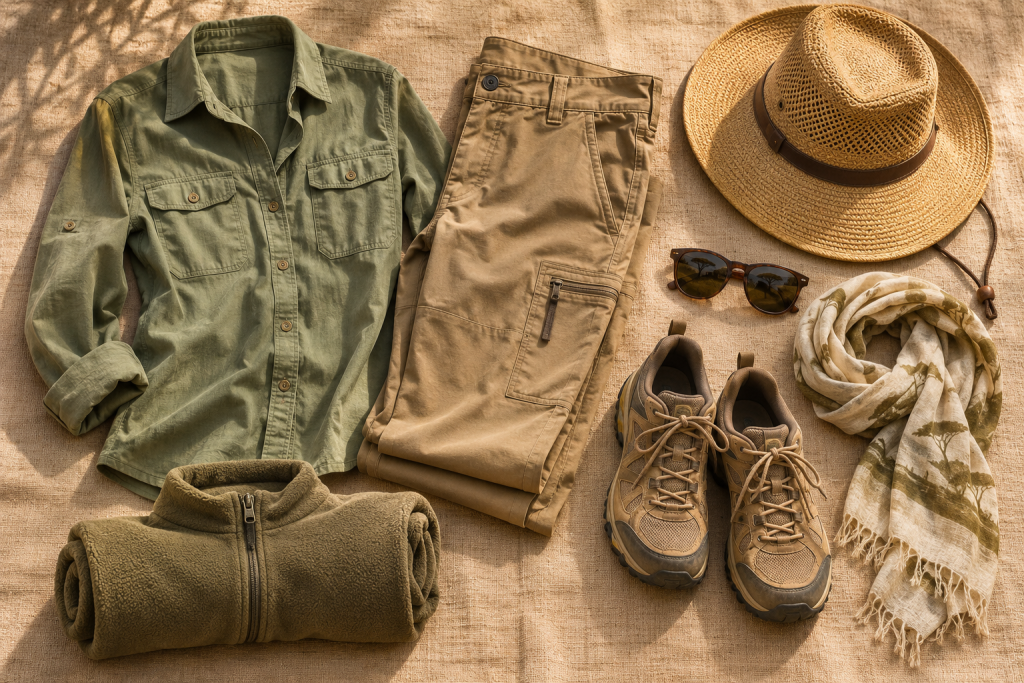
Pack breathable layers for sunny afternoons and a fleece for cooler mornings.
Clothing is one of the most important parts of any Kenya safari packing list. Since you may spend several hours outdoors or inside a safari vehicle, comfort should always come first.
1. Lightweight, Breathable Shirts
Comfortable cotton or quick-drying shirts are ideal for long days outdoors.
Choose neutral colours such as beige, olive green, brown and khaki. These colours blend naturally into the surroundings and are practical for dusty safari conditions.
Additionally, long-sleeved shirts provide extra protection from the sun and insects without necessarily making you feel too warm.
2. Comfortable Safari Trousers
Lightweight, loose-fitting trousers are an excellent choice for game drives.
Not only do they protect your legs from the sun, but they also provide additional coverage against insects and cooler morning temperatures.
Fortunately, you do not need expensive safari clothing. Comfortable trousers that you already own can work perfectly well.
3. A Warm Jacket or Fleece
Do not underestimate how cold a Kenyan morning can feel.
If you are heading out for an early game drive, especially in an open safari vehicle or around Nanyuki, a lightweight fleece or warm jacket is worth packing.
As the temperature rises throughout the day, you can simply remove the extra layers.
Depending on the season, you may also want to bring a lightweight waterproof jacket.
4. Comfortable Walking Shoes
Although you may spend most of your safari inside a vehicle, comfortable closed shoes are still essential.
For example, you might visit wildlife sanctuaries, stop at designated picnic areas or participate in guided walks.
A comfortable pair of trainers or lightweight walking shoes will often be sufficient for an ordinary game drive. However, proper hiking footwear is advisable if your itinerary includes mountain trails.
5. A Sun Hat
A wide-brimmed hat helps protect your face, ears and neck from direct sunlight.
Moreover, if you are spending several hours outdoors or travelling in an open safari vehicle, a hat with a secure strap can be particularly useful.
6. Sunglasses
Sunglasses are another simple but important addition to your Kenya safari packing list.
Choose a pair with reliable UV protection, especially if you plan to spend several days exploring the savannah.
Besides protecting your eyes, sunglasses can make travelling in bright conditions more comfortable.
7. A Lightweight Scarf
A lightweight scarf is surprisingly versatile.
You can use it for additional sun protection, warmth during early morning drives or protection against dust on unpaved roads.
Best of all, it takes up very little space in your luggage.
Kenya Safari Packing List: Equipment and Technology
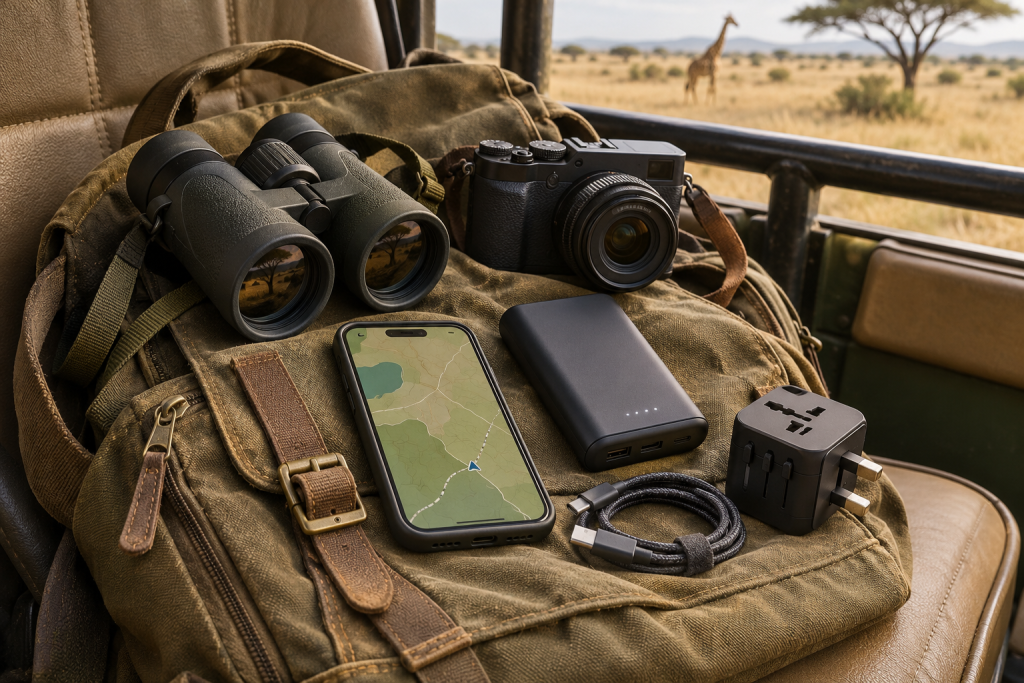
Keep your binoculars within reach and download your maps before heading out.
Seeing wildlife in its natural habitat is undoubtedly one of the highlights of travelling through Kenya.
However, having the right equipment can make those moments even more memorable. A practical Kenya safari packing list should therefore include reliable equipment that helps you enjoy wildlife encounters without carrying unnecessary luggage.
8. Binoculars
Animals will not always be conveniently standing beside the road.
Sometimes, the most interesting sightings happen far away, hidden among trees or across open grasslands.
A good pair of binoculars allows you to observe wildlife more closely without disturbing the animals.
Furthermore, binoculars are particularly useful for birdwatching and spotting animals resting in the distance.
9. A Camera or Smartphone
Kenya offers endless opportunities for beautiful photography.
From breathtaking landscapes and colourful birds to elephants, rhinos and giraffes, there is always something worth capturing.
While a camera with a good zoom lens is beneficial for wildlife photography, a modern smartphone can also capture wonderful memories.
Remember, however, to put the camera down occasionally and simply enjoy the moment. Not every beautiful experience needs to be captured through a lens.
10. A Portable Power Bank
When you leave early in the morning and spend the entire day exploring, your phone battery can drain quickly.
Photography, videos, navigation and wildlife identification apps all consume power.
Consequently, a fully charged power bank is one of the most practical safari essentials you can carry.
If you are flying, remember to check your airline’s rules regarding power banks and lithium batteries.
11. Charging Cables
It is easy to remember your camera or phone and forget the accessories that keep them working.
Pack the charging cables for your phone, camera, smartwatch and other electronic devices.
Additionally, a small organiser can help keep everything together and prevent cables from becoming tangled inside your bag.
12. A Travel Adapter
Kenya primarily uses Type G electrical sockets, the same three-pin socket design commonly found in the United Kingdom.
Therefore, if you are travelling from continental Europe, the United States or another country with different plugs, you will likely need a suitable travel adapter.
Always check whether your electronic devices support the local voltage before plugging them in.
13. Offline Maps
Internet connectivity may be unreliable in remote wildlife areas.
Before leaving your accommodation, download offline maps of your destination and surrounding areas.
However, digital maps should never replace official conservancy maps or instructions from park staff.
During a self-drive safari, always follow designated roads and respect restricted areas.
A small torch or headlamp can also be useful if you are staying at a remote safari camp.
Kenya Safari Packing List: Personal Care and Wellness Essentials
Spending long hours outdoors means taking care of yourself is just as important as preparing your camera equipment.
When preparing your Kenya safari packing list, remember that personal comfort, sun protection and hygiene are essential for an enjoyable adventure.
14. Sunscreen
Even on cloudy days, protecting your skin from UV exposure is important.
Pack broad-spectrum sunscreen with at least SPF 30 and reapply it according to the product instructions, particularly when spending extended periods outdoors.
Additionally, remember commonly overlooked areas such as your ears, neck and hands.
15. Insect Repellent
Insect repellent is another important safari essential.
Mosquitoes and other insects can be present in different regions, particularly around water and during the evenings.
Choose an effective insect repellent and follow its application instructions carefully.
Furthermore, consult a travel health professional before your trip about malaria prevention and recommended vaccinations for your specific itinerary.
16. Travel-Sized Deodorant
A compact deodorant is a practical addition to your safari daypack.
Long drives, warm afternoons and outdoor activities can make you appreciate having a few personal care essentials within easy reach.
Alternatively, solid or refillable deodorants can help reduce the amount of disposable packaging you carry, depending on the product.
17. Lip Balm
Sun exposure, dust and dry air can leave your lips feeling uncomfortable.
Fortunately, a moisturising lip balm, preferably with SPF protection, takes up almost no space and can be useful throughout your trip.
18. Personal Hygiene Products
Pack enough personal hygiene products to last throughout your safari, particularly if you are staying in remote areas.
For women, this may include menstrual products, spare underwear and any preferred personal care items.
Although you can purchase many everyday essentials in Kenyan towns, finding your preferred products may be more difficult when staying far from shopping centres.
Therefore, it is worth preparing these items before your departure.
19. Personal Medication and a First-Aid Kit
A small travel first-aid kit is always worth carrying.
Consider including plasters, antiseptic wipes, dressings, oral rehydration salts and medicines recommended by your healthcare professional.
Additionally, bring enough of your prescribed medication for the duration of your trip.
If you are travelling internationally, keep essential medication in its original packaging and carry any necessary supporting documentation.
Kenya Safari Packing List for a Self-Drive Adventure
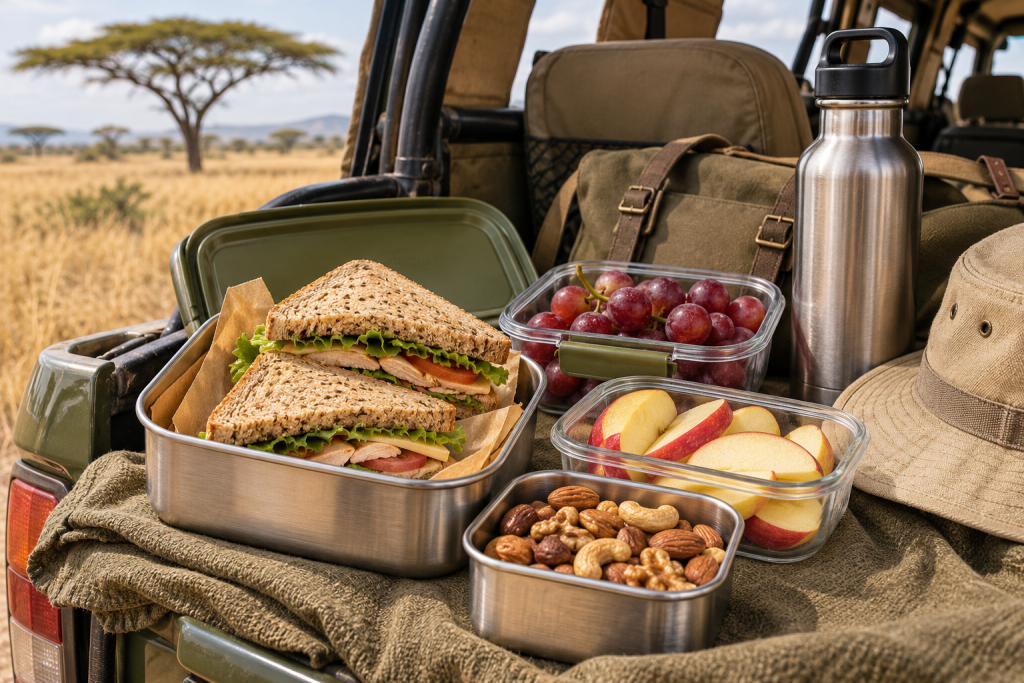
For our Ol Pejeta self-drive safari, I packed sandwiches, fruit and nuts before we set off.
One of the things I enjoy about a self-drive safari is the freedom to explore at your own pace.
You can spend more time observing wildlife, stop at permitted viewpoints and enjoy the experience without rushing from one place to another.
However, a self-drive safari also means taking responsibility for your own supplies and preparation.
20. A Reusable Water Bottle
Staying hydrated is extremely important during a safari.
Pack enough safe drinking water for everyone travelling with you, especially if you are planning a full-day game drive.
After all, you may not always have access to shops or restaurants once you enter a wildlife conservancy.
A reusable water bottle is not only practical but also helps reduce unnecessary waste.
21. Packed Lunch and Snacks
This was an important part of preparing for our self-drive safari at Ol Pejeta Conservancy.
Before leaving, I prepared sandwiches and packed fruits, nuts and snacks so that we had something to eat throughout the day.
When you are busy searching for wildlife, having food readily available makes the experience much more convenient.
Some easy safari snack ideas include:
- Fresh fruit
- Sandwiches
- Dried fruit
- Crackers
- Nuts
- Energy bars
- Homemade wraps
Nevertheless, always eat in designated areas, store food securely and never feed wild animals.
If you are planning a similar adventure, you can read more about our self-drive safari at Ol Pejeta Conservancy, including our journey and visit to the chimpanzee sanctuary.
22. Reusable Food Containers
Reusable lunch boxes and insulated food bags are useful for keeping your food organised.
Furthermore, an insulated bag with ice packs can help keep perishable food cool during warmer weather.
Kenya has strict regulations concerning plastic carrier bags. Therefore, reusable cloth bags and suitable food containers are better alternatives to disposable shopping bags.
You can learn more about these restrictions through Kenya’s National Environment Management Authority.
23. A Comfortable Daypack
Rather than carrying your entire suitcase during a game drive, pack your essentials into a small daypack.
For instance, your safari daypack can hold your sunscreen, sunglasses, water, snacks, camera, power bank, insect repellent and personal care products.
Having everything organised and within reach means you can spend less time searching through your luggage and more time enjoying your surroundings.
Kenya Safari Packing List: Documents and Luggage
No Kenya safari packing list would be complete without mentioning travel documents and suitable luggage.
Although these items may not seem as exciting as photography equipment or safari clothing, they are equally important when preparing for your journey.
24. Passport and Essential Travel Documents
Depending on your nationality and travel arrangements, you may need several documents before entering Kenya.
These may include:
- A valid passport
- An approved electronic travel authorisation, where applicable
- Accommodation confirmations
- Travel insurance documents
- Vaccination certificates, where required
- Driving licence and vehicle rental documents
Additionally, keep digital copies of important documents alongside securely stored physical copies.
Before travelling, check the latest entry requirements through the official Kenya electronic travel authorisation portal.
25. Lightweight, Soft-Sided Luggage
If your itinerary includes domestic flights to safari destinations, check your airline’s baggage allowance before packing.
Smaller safari aircraft often have more restrictive luggage requirements than international flights. Furthermore, some operators prefer or require soft-sided bags because of limited storage space.
Consequently, a lightweight duffel bag or suitable soft-sided travel bag may be more practical than a large, rigid suitcase.
The good news is that you do not need an enormous amount of clothing for a safari. Instead, versatile outfits that you can mix, match and layer are often enough.
Kenya Safari Packing List for Families with Children
Travelling through Kenya with children can be a wonderful experience.
Seeing wildlife in its natural environment offers opportunities to learn about animals, conservation and nature in a way that books and television simply cannot replicate.
However, long game drives can sometimes test children’s patience.
If you are travelling as a family, adapt your Kenya safari packing list to include additional essentials that will keep your children comfortable and entertained throughout the journey.
Consider packing:
- Extra snacks and drinking water
- Spare clothing
- Children’s sunscreen
- Age-appropriate insect repellent
- A small blanket
- Children’s binoculars
- Activity books and colouring materials
- A wildlife spotting checklist
- Any necessary medication
- Suitable child restraints for the vehicle
A wildlife spotting checklist can also turn the safari into an exciting game. For example, children can look out for different animals and tick them off as they discover them.
Additionally, plan regular breaks at permitted stopping areas and avoid making your itinerary unnecessarily demanding.
Sometimes, a shorter and more relaxed game drive can be just as rewarding as spending an entire day exploring.
Kenya Safari Packing List: What to Leave at Home
Knowing what to leave at home is equally important when preparing for your adventure.
Although it can be tempting to pack an outfit for every possible occasion, travelling with less luggage often makes the journey much easier.
Consider leaving behind:
- Unnecessary valuables and expensive jewellery
- High heels and uncomfortable formal shoes
- Excessive clothing
- Heavy luggage unsuitable for domestic flights
- Unnecessary electronic devices
- Prohibited plastic carrier bags
- Large quantities of toiletries
Furthermore, check the regulations concerning drones before bringing one into Kenya, as their importation and use are regulated.
Most importantly, remember that a safari is about experiencing nature rather than having the perfect outfit for every photograph.
Comfort and practicality should always come first.
Kenya Safari Packing List: What to Leave at Home
Beyond preparing your Kenya safari packing list, there are several practical things to consider before entering a wildlife conservancy or national park.
First, make sure your vehicle is suitable for the terrain and expected weather conditions. Depending on your destination, a four-wheel-drive vehicle may be advisable or required.
Next, check your fuel level, spare tyre, vehicle recovery equipment and emergency contact numbers before setting off.
Furthermore, confirm the park’s opening and closing times, obtain an official map and familiarise yourself with its visitor guidelines.
Always remain inside your vehicle unless you are in an authorised area where getting out is permitted.
Although some animals may appear calm, wild animals are unpredictable. Therefore, maintaining a safe distance is essential for both your safety and theirs.
For additional information about visiting Kenya’s national parks and reserves, consult the official Kenya Wildlife Service website.
Finally, take your time. You do not need to rush through every road or see every animal in a single day. Part of the beauty of a safari is discovering what nature has to offer along the way.
Kenya Safari Packing List: Frequently Asked Questions
What Colours Should I Wear on a Kenya Safari?
Neutral colours such as khaki, beige, olive green and brown are practical choices. They blend into natural surroundings and are suitable for dusty outdoor conditions.
Can I Wear Jeans on a Safari?
Yes, you can wear jeans. However, lightweight trousers may be more comfortable during hot afternoons because denim tends to be heavier and less breathable.
Is It Cold on Safari in Kenya?
It can be, particularly during early mornings, evenings and in higher-altitude regions. Therefore, packing several lightweight layers is advisable.
Do I Need Binoculars for a Safari?
Although binoculars are not compulsory, they can greatly improve your wildlife-viewing experience, especially when animals are far away.
Do I Need Expensive Safari Clothing?
No. Comfortable, practical clothing that suits the weather is generally sufficient. In fact, you may already own most of the clothing you need for your safari.
Can I Bring My Own Food on a Safari?
Many self-drive destinations allow visitors to bring their own food. However, check the specific park or conservancy regulations and only eat in designated areas.
Additionally, never leave food or rubbish behind.
How Much Luggage Can I Take on a Safari?
Your luggage allowance depends on your transport arrangements. Domestic safari flights may have stricter weight and bag-size restrictions than international airlines.
Therefore, always check directly with your airline or safari operator before travelling.
What Should Women Pack for a Safari in Kenya?
In addition to comfortable clothing and general safari equipment, women may wish to pack preferred menstrual products, personal care essentials, supportive underwear and any necessary medication.
Do I Need a Four-Wheel-Drive Vehicle for a Safari in Kenya?
This depends on the destination, road conditions and time of year. While some conservancies have roads suitable for different vehicles, others may recommend or require a four-wheel-drive vehicle.
Always confirm the requirements with your chosen destination before setting off.
Final Thoughts on Your Kenya Safari Packing List
A safari in Kenya is about more than spotting the Big Five. It is about slowing down, appreciating nature and experiencing the beauty of wildlife in its natural environment.
Sometimes, the most memorable moments are the unexpected ones.
With a little preparation and the right essentials, you can spend less time worrying about what you forgot and more time enjoying the adventure.
Hopefully, this Kenya safari packing list helps you feel prepared and excited for your upcoming trip.
Whether you are visiting Ol Pejeta Conservancy, exploring the Maasai Mara or discovering another beautiful corner of Kenya, remember to travel responsibly, respect wildlife and leave nature as beautiful as you found it.
Beyond its incredible wildlife, Kenya also offers rich traditions, diverse landscapes and fascinating cultural experiences. If you are planning a longer visit, take some time to discover the country’s culture and explore beyond its famous safari destinations.
And, of course, leave a little room in your luggage for the memories you will bring home.
Happy exploring!
Planning your next adventure?
Subscribe to The Waihuini Edit for more practical travel guides, destination inspiration, lifestyle tips and stories from my adventures around the world
The Waihuini Edit
Get new travel stories by email
Travel guides, destination ideas, practical tips and lifestyle stories, sent to your inbox when something new goes up. Free, and you can unsubscribe anytime.
We use your email only for this newsletter. It is sent with Kit, and you confirm by email first. Privacy Policy