
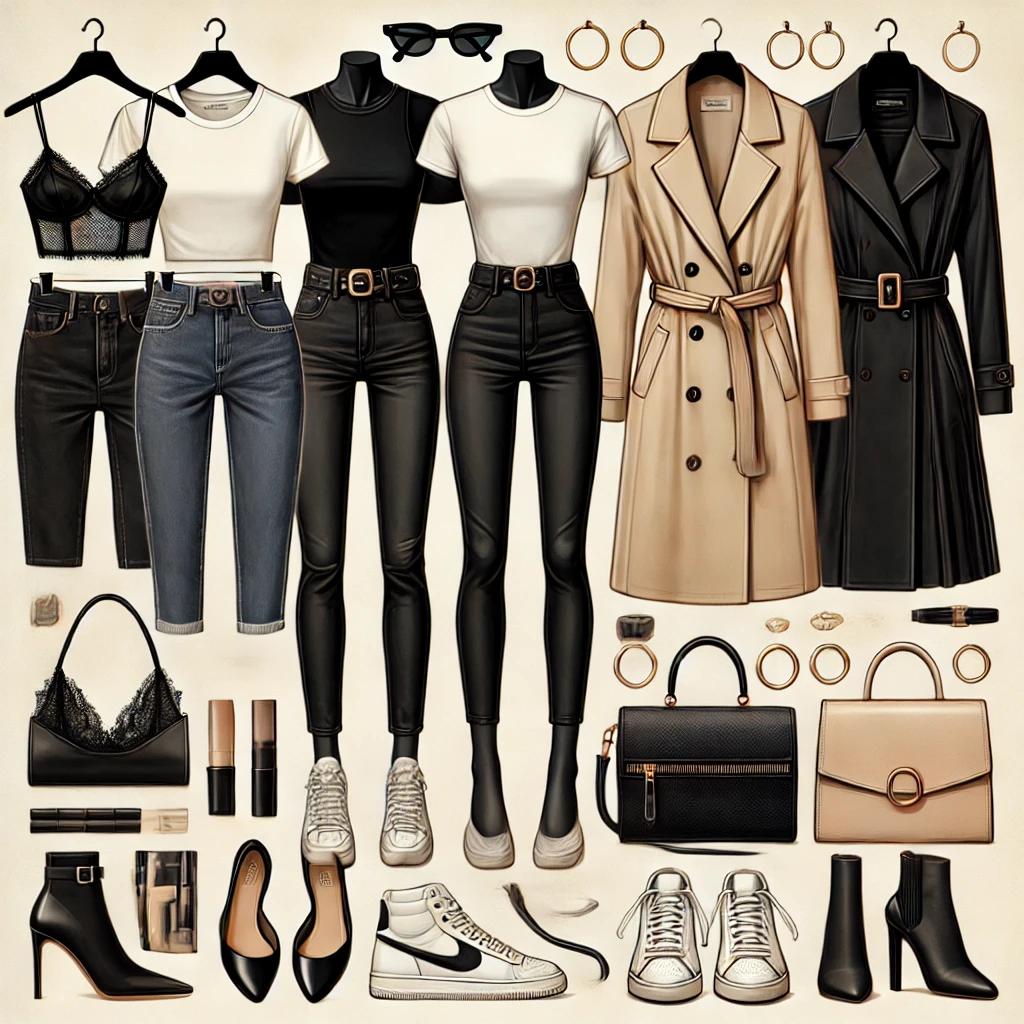
Women’s wardrobe essentials should make getting dressed easier. The most useful pieces fit well, suit your daily life and work with clothes you already enjoy.
First, look at what you reach for each week. Perhaps you live in jeans and soft knits. Maybe you prefer dresses or need smart clothes for work. Either way, those habits give you a useful place to start.
Before shopping, use this guide to review your clothes, build outfits and find any gaps. A practical wardrobe isn’t about owning everything. It’s about having the right pieces for you.
Women’s Wardrobe Essentials Checklist
Start by checking what you already own. Then choose the pieces that suit your budget, climate and personal style.
Simple pieces to mix and match for work and weekends. AI-generated illustration for Waihuini.com.
| Wardrobe area | Pieces to consider | What to check |
|---|---|---|
| Everyday tops | T-shirts, long-sleeved tops or tanks | Can you wear them comfortably with several bottoms? |
| Smarter tops | A shirt, blouse or fine knit | Does it work for your usual dressier occasions? |
| Bottoms | Jeans, trousers, skirts or shorts | Can you sit, walk and bend comfortably? |
| One-piece outfits | A dress, jumpsuit or matching set | Does it work with your shoes and underwear? |
| Layers | A cardigan, jumper, blazer or overshirt | Does it fit over your everyday tops? |
| Outerwear | A rain jacket, warm coat or light jacket | Will it handle your local weather? |
| Shoes | Trainers, boots, sandals or smart flats | Can you wear them for as long as you need? |
| Accessories | A bag, belt, scarf or jewellery | Do you enjoy using them with your clothes? |
Once you’ve checked the list, note anything that would help you wear more of your existing wardrobe.
How to Choose Women’s Wardrobe Essentials for Your Lifestyle
Choosing women’s wardrobe essentials becomes easier when you understand what your everyday routine requires.
First, think about an ordinary week. How much time do you spend at work, at home, walking or travelling?
If you spend most days on your feet, give comfortable shoes space in your budget. Meanwhile, working from home may call for soft trousers and easy layers. A job with a dress code may require a few reliable work outfits.
Next, consider your laundry routine. A top that needs special care may suit you for evenings out. For daily wear, however, you might prefer something you can wash easily.
Finally, think about comfort and access. Stretch waistbands, simple fastenings and room to move can make a real difference.
Women’s Wardrobe Essentials: Versatile Tops
Start with a few tops you feel comfortable wearing. For example, a T-shirt can work with jeans, trousers or a skirt. During colder months, you can also wear it beneath a knit or jacket.
Next, add a smarter top if you need one. A shirt, blouse or fine knit can work for meetings, dinner or a family event. Choose a neckline, sleeve length and fabric you enjoy.
Neutral colours can make mixing clothes easier. However, colour works just as well when it suits the rest of your wardrobe. For instance, burgundy pairs easily with navy, denim and grey.
Before buying a top, try to picture it with three things you own. That way, you can see whether it fills a useful gap.
A useful collection of women’s wardrobe essentials includes tops that work with several outfits, rather than pieces you can only wear once or twice.
Women’s Wardrobe Essentials: Jeans, Trousers and Skirts
Comfortable bottoms are an important part of women’s wardrobe essentials because they can work across several occasions.
If you enjoy jeans, choose the cut you prefer. Straight, wide, slim and relaxed styles can all work.
For smarter days, try trousers with enough room to sit and move. Also check the waistband, pockets and length. Then walk around in them before deciding.
Skirts and shorts offer more choice for warm weather. Alternatively, loose trousers or a long skirt may suit your preferred coverage.
If easy dressing matters most, look for pull-on styles or simple fastenings. Above all, choose clothes that feel good throughout the day.
Dresses and Easy One-Piece Outfits
A dress can make getting ready quick because the main outfit is already there. Similarly, a jumpsuit or matching set can give you an easy starting point.
First, try it with shoes you already own. Then check how it feels when you sit, reach and walk. With a jumpsuit, also consider how easily you can take it on and off.
For evening plans, start with an outfit you already like. For example, a dress may feel different with a change of shoes and earrings. Alternatively, trousers and a favourite blouse can work well.
You don’t need a particular style of dress to have a complete wardrobe. Choose one-piece outfits only if you enjoy wearing them.
Women’s Wardrobe Essentials: Layers and Outerwear
Practical outerwear belongs among women’s wardrobe essentials, especially when your local weather changes throughout the year.
Layers help you use the same clothes across different temperatures. For example, wear a T-shirt alone in warm weather. Then add a cardigan in spring or a heavier jumper in winter.
Before choosing outerwear, think about the weather you face most often.
- For rain, check the jacket’s rain protection, seams and hood. A trench coat may need a separate rain layer.
- For cold weather, leave room for warm clothes underneath. Also try the coat with your usual winter layers.
- For warm climates, choose light fabrics and the coverage you prefer. Meanwhile, keep a layer handy for cool indoor spaces.
- For mild weather, a cardigan, overshirt or light jacket may be enough.
Finally, keep colour personal. If bright clothes make you happy in winter, wear them.
Women’s Wardrobe Essentials: Shoes and Accessories
First, choose shoes that suit your daily routes. For example, trainers, loafers, supportive sandals or boots may be your most useful pair.
Then consider whether you need a smarter option. Flats work well for many dressier occasions. However, if you enjoy heels, choose a height you can walk and stand in comfortably.
Next, check your everyday bag. Does it hold what you carry? Can you wear it comfortably while walking or travelling?
Finally, use accessories to vary your outfits. For instance, a scarf adds colour, while earrings can change the feel of a plain top.
For underwear, focus on comfort beneath your usual clothes. A shade close to your skin tone can also be useful under light fabrics.
The best accessories are the ones you genuinely enjoy using, whether they’re simple everyday pieces or something more colourful.
Easy Outfit Combinations for Different Occasions
You can use women’s wardrobe essentials to create outfits for work, weekends, travel and special occasions.
Use these combinations as a starting point. Then swap the colours, cuts and shoes to suit your style.
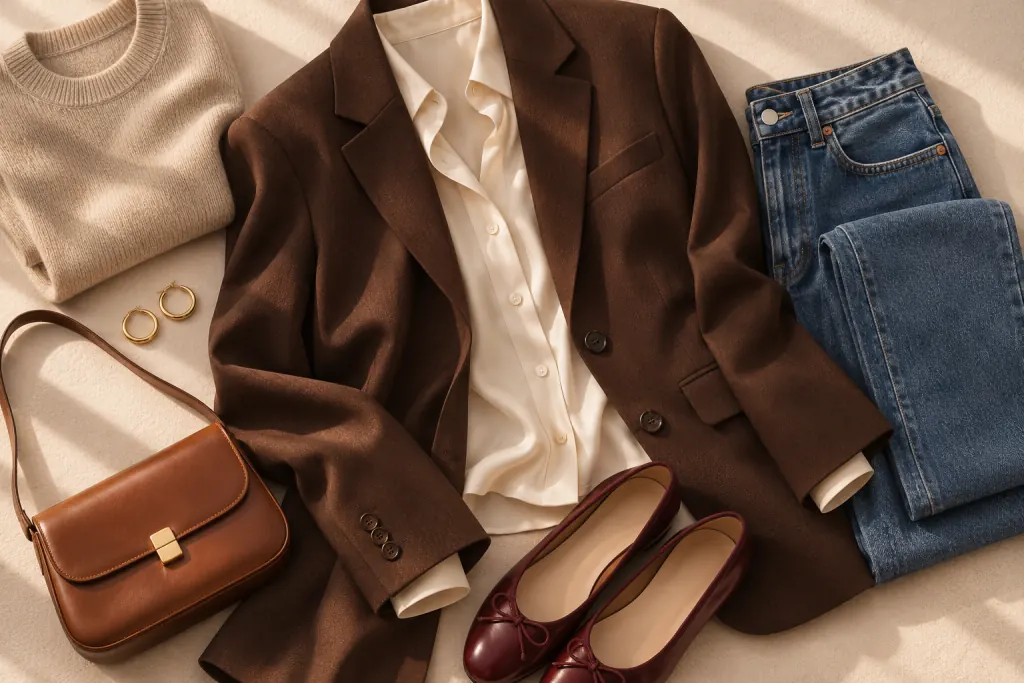
Women’s wardrobe essentials including blazer, blouse, jeans, flats and handbag Simple pieces to mix and match for work and weekends. AI-generated illustration for Waihuini.com.
| Occasion | Outfit combination | Easy variation |
|---|---|---|
| Work | Trousers, a shirt and loafers | Add a cardigan or blazer |
| Casual weekend | Jeans, a T-shirt and trainers | Add a colourful knit or overshirt |
| Travel | Comfortable trousers, a soft top and walking shoes | Bring a light layer you can remove easily |
| Dinner out | A favourite dress and smart shoes | Try trousers and a blouse instead |
| Warm weather | A loose top, shorts or a skirt, and sandals | Add a light shirt for coverage |
| Cold weather | Trousers, a long-sleeved top, a knit and boots | Finish with a coat suited to the temperature |
For more work outfit ideas, read my guide to dressing for work and business occasions.
Women’s Wardrobe Essentials for a Capsule Wardrobe
A capsule wardrobe starts with women’s wardrobe essentials that complement one another.
A capsule wardrobe is a small group of clothes that work well together. You can choose the size based on your routine and laundry needs.
First, pull out a few favourite pieces. Next, build complete outfits around them. Include shoes and outerwear so you can spot any missing links.
Then look for colours that repeat. For example, a patterned skirt may include the same green as your favourite cardigan. That gives you an easy pairing.
Finally, take photos of the outfits you like. On a busy morning, those pictures can help you get dressed faster.
You don’t need to throw away clothes or follow a strict number of items to create a capsule wardrobe. Start with what you have and make changes gradually.
Build Your Wardrobe on a Budget
Buying women’s wardrobe essentials on a budget starts with identifying what you actually need.
Perhaps your work trousers no longer fit. Or maybe you have several skirts but few tops to wear with them.
Once you know the gap, set a budget for it. Then compare the fit, fabric, seams and care needs of each option.
Before buying new, also check second-hand shops. If you shop online, review the measurements, signs of wear and return terms.
Meanwhile, look at clothes you already own. A loose hem or missing button may be all that stops you from wearing something.
For a single event, borrowing or renting may also work. However, compare the full cost, including cleaning and delivery.
Remember that expensive clothes aren’t automatically better. A reasonably priced item that fits well and gets worn regularly may offer more value than something costly that stays in your wardrobe.
Make Mixing and Matching Easier
First, choose one piece you want to wear. Then build the outfit around it.
For example, start with wide-leg trousers and try a soft knit, a tucked shirt or a short jacket. Take a photo of each option so you can compare them.
Next, change one thing at a time. Swap the shoes, add a belt or try another layer. This makes it easier to see what you like.
Also keep your preferred fit in mind. If you enjoy loose shapes from head to toe, wear them. If you prefer a more defined waist, try a tuck or belt.
Finally, repeat combinations you enjoy. A useful wardrobe includes outfits you’re happy to wear again.
You can create plenty of variety without constantly shopping for new clothes.
Care for Clothes So You Can Keep Wearing Them
First, read the care label. Follow its advice for washing, drying, ironing and steaming.
Then deal with small repairs while they’re manageable. For example, replace a loose button before it falls off. A repaired seam or hem can also bring an unworn piece back into use.
WRAP, a sustainability organisation, researches ways to keep clothing in use for longer and reduce waste. Explore WRAP’s work on sustainability and clothing.
When reviewing your wardrobe, start with three groups. Keep what you wear, set aside repairs and find a suitable next home for clothes you no longer use.
After that, organise the pieces so you can see them. You may find a simple layout works well before buying extra storage.
Looking after women’s wardrobe essentials can help you get more use from the pieces you already love.
My Experience With Women’s Wardrobe Essentials
In my experience, building a wardrobe with essentials has made dressing up easier and more enjoyable. Whether I’m getting ready for work, a casual outing or a special event, I often rely on the familiar pieces in my closet.
Over time, balancing style with function has given me more confidence in my choices. I can mix and match while still wearing things that feel like me.
For me, women’s wardrobe essentials are about making everyday dressing simpler without losing my personal style.
Thank you for joining me on this style journey. Feel free to share your wardrobe ideas and personal styling tips.
Which piece do you reach for most often?
